Showing posts with label science. Show all posts

Wednesday, May 9, 2012

Lunch time?

Would you eat this?

 A caramelized locust is used to decorate a cake made of insects at the University of Wageningen. 


How about this?

  A cupcake made of insects.

 Research by scientists at the university showed that insects could provide the best source of protein to meet the needs of a rising population. Currently, 70 percent of agricultural land is used for livestock production.
 

REUTERS/Michael Kooren

Source

Monday, April 9, 2012

Studies find pesticides tied to collapse of bee colonies

Honey bee populations have been crashing around the world in recent years, and pesticides have been suspected, along with other potential factors such as parasites, disease and habitat loss, in what's known as Colony Collapse Disorder. In the U.S., some beekeepers in 2006 began reporting losses of 30-90 percent of their hives.

Two recently released studies found that a widely used crop pesticide first introduced in the 1990s has caused significant changes to bee colonies worldwide and removing it could be the key factor in restoring nature's army of pollinators.

The scientists behind the studies called for regulators to consider banning the class of chemicals known as neonicotinoid insecticides. In the U.S., the Environmental Protection Agency told msnbc.com that the studies would be incorporated into a review that's currently underway.

Source

Thursday, March 15, 2012

World's first cloned goat

Noori, a cloned Pashmina goat, is seen inside the sheep breeding center at Sher-e-Kashmir University in Kashmir, India, on March 14. The healthy female kid was born March 9 using a foster mother.

Source

Tuesday, February 7, 2012

What If All the Cats in the World Suddenly Died?

Cats, beloved or otherwise, don't radiate the message that they're indispensable, hard-working members of the household, or the world. But experts say that if all the world's cats suddenly died, things would quickly go to hell in a handbasket.

By killing mice and rats in barns and grain storage areas, cats are vital for keeping those pests in check.

A 1997 study in Great Britain found that the average house cat brought home more than 11 dead animals (including mice, birds, frogs and more) in the course of six months. That meant the 9 million cats of Britain were collectively killing close to 200 million wild specimens per year — not including all those they did not offer up to their owners.

A study in New Zealand in 1979 found that, when cats were nearly eradicated from a small island, the local rat population quickly quadrupled. As rat numbers increased in the absence of cats, the population of seabirds whose eggs rats preyed upon declined. If the approximately 220 million domestic cats in the world all bit the dust, seabird populations would likely fall worldwide, while the populations of non-cat predators that prey on rats would be expected to increase.

Source

Thursday, July 28, 2011

Are monkey experiments justified?

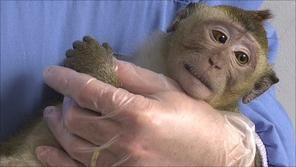
The current president of the Zoological Society of London,Professor Sir Patrick Bateson, was commissioned by the main bodies that fund medical research in Britain to assess whether the studies on non-human primates (NHPs) were necessary, high-quality and yielded significant advances in medical science. Animal welfare groups opposed to experimentation on monkeys called again for the practice to be banned outright. Bateson's report stated that the practice should continue and finds the current work to be generally of good quality. But also voiced concern that no clear scientific, medical or social benefits had emerged from nearly one in 10 projects. It also said that in a minority of experiments, the justification for using monkeys was "not compelling". Source

Thursday, July 14, 2011

Lizards - smarter than we thought

A vibrant green tree-dwelling lizard has surprised scientists with its mental prowess by succeeding in a problem-solving test. The tropical lizard Anolis evermanni was able to associate the colour of a disc with a food reward - flipping over the correct disc to reveal a worm secreted underneath. Read More - BBC Nature

Thursday, May 5, 2011

Found on the web

Animal-Human Leprosy Link Found People infected with leprosy in the United States often have the same previously unknown strain of the microbe Mycobacterium leprae that is also carried by armadillos. Elderly Animals - in pictures Photographer Isa Leshko has set out to document old age in the animal kingdom with a series of beautiful photographs. 10 Amazing Zoos Every Animal Lover Should See Instead of going back to your local zoo again and again, why not see what else the world has to offer? Here are 10 amazing zoos every animal lover should see.

Monday, April 11, 2011

Shar-Pei dogs shed light on human Fever Syndromes

The gene mutation responsible for the wrinkled skin of Shar-Pei dogs is also linked to a periodic fever disorder, a finding that could have important implications for human health, researchers report. Shar-Pei dogs have a high prevalence of a periodic fever disorder that is similar to inherited autoinflammatory periodic fever syndromes in humans. The thick, wrinkled skin of Shar-Pei dogs contains an excess of hyaluronan, most likely because of an over-activation of the hyaluronan synthase 2 (HAS2) gene. The fever disorder in the dogs occurs when overproduction of hyaluronan activates the immune system, according to scientists at the Broad Institute in Cambridge, Mass., and Uppsala University in Sweden. Read more . . .

Friday, April 1, 2011

Chickens for vampires?

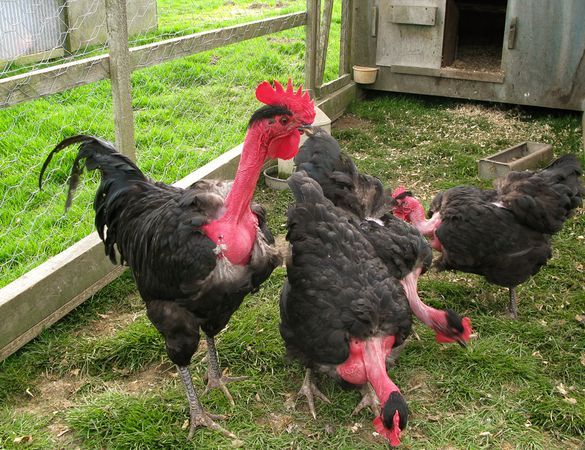
Photograph courtesy University of Edinburgh The naked neck chicken—also dubbed the churkey or turken—has a chicken-like body but a turkey-like head atop a long, deep-red neck. The mutation first arose in domestic chickens in northern Romania hundreds of years ago. Scientists have cracked why the Transylvanian naked neck chicken has a featherless neck—and it isn't to give vampires easier access. The Transylvanian bird's naked neck results from a random genetic mutation that causes the overproduction of a feather-blocking molecule called BMP12, a new DNA study shows. Source

Thursday, March 31, 2011

Found on the web

Dog auctions: Where puppy millers do their dirty business Envision rooms filled floor to ceiling with crates and cages each housing dogs whose sole purpose in life is to make puppies. 10 amazing camouflaged animals Whether it's a gecko blending into bark, a jaguar fading into foliage or a Peringuey's viper sliding through sand, good camo can mean the difference between eating and being eaten. World's Oldest Animal Life - 650,000,000 Years Old Primitive ocean sponges discovered in Australia could be the worlds oldest animal body fossils. The Cutest Interspecies Animal Friendships These pictures will make your heart melt!

Wednesday, January 26, 2011

Sleeping with pets carries disease risk

Nonsense! Nonsense! Nonsense! Sleeping with and “kissing” your animals on their little pet lips puts you at risk for some serious medical problems — even when those pusses and pooches are seemingly healthy, according to “Zoonoses in the Bedroom,” a study published in the February issue of the CDC journal Emerging Infectious Diseases. “The risk of contracting something is rare, but if you’re that person who gets a disease from a pet, rare doesn’t matter that much,” says the paper’s co-author Bruno Chomel, a professor at the University of California-Davis school of veterinary medicine and an expert in zoonoses, the transmission of disease from animal to human. “I know this will make me unpopular, but pets really don’t belong in your bed.” Source --- Please remember: you can't believe everything you read on the internet. The American Veterinary Medical Association doesn’t have a formal recommendation about pets sleeping with their humans. But AVMA president Larry Kornegay affirms that zoonotic diseases are “uncommon, if not rare.”

Monday, January 10, 2011

Scary pork?

In a small complex of nondescript barns set in the flat, snow-covered fields of Ontario, Enviropig is a scientific project which, some argue, represents the new frontier of a technology that could benefit millions of people around the world. For others what is happening here is weird, dangerous science. The pigs they are breeding could be among the first genetically modified farm animal to be approved for human consumption.Each pig contains genes from mice and E.coli bacteria, which have been inserted into their DNA with absolute precision. Those genes make a small but important difference to the way these pigs process their food. Ordinarily, pigs cannot easily digest chemicals called phosphates. That means that the stuff that comes out of the back end can be toxic and damaging to the environment. The phosphates are easily washed into waterways, where they can produce a hugely fertile environment for plants. But the plants grow so rapidly that they choke the stream or river and cause huge damage to the ecosystem. The genetic modification enables these pigs to digest phosphates, which means they are less polluting and cheaper to feed. Source

Friday, December 31, 2010

What's new?

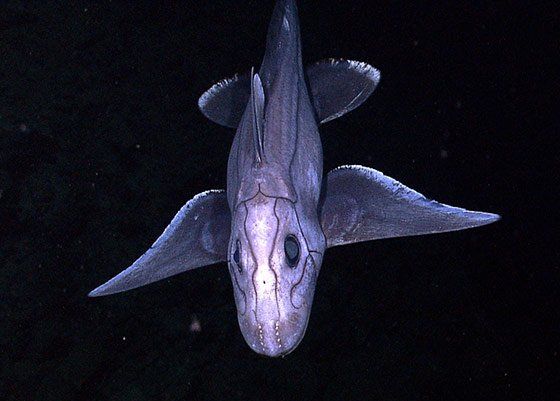
New species discovered in 2010 From invisible squids to bald parrots to deep-sea fish with teeth on their tongues, guardian.co.uk picks the best of of 2010's newly discovered animals. This image provided by NOAA shows a deep-sea chimaera. Chimaeras are most closely related to sharks, although their evolutionary lineage branched off from sharks nearly 400m years ago, and they have remained an isolated group ever since.

Thursday, December 30, 2010

Lord of the Ants

A fascinating man - Ed Wilson is the ant man. Over six decades at Harvard University he has discovered more about ants than anyone else in history. He has thrown into relief for the general public just how important ants are—how they represent 25% or more of the insect biomass on the planet, how collectively they weigh more than all the humans in the world, how they assist humans by aerating the soil, suturing wounds, or, as in South Africa, harvesting the rooibos seeds for farm workers to collect. And how ancient they are: in 1966 Wilson and his colleagues identified an ant in a shard of amber that was 80m years old. Ants emerged along with flowering plants 130m years ago. By contrast, the genus Homo diverged 2m years ago, has existed as Homo sapiens for a fraction of that time, with a civilization of 20,000 years or so. Read more: Ants and Us, Published on More Intelligent Life or watch NOVA: Lord of the Ants on YouTube

Wednesday, December 8, 2010

Did Animals Make Humans Human?

A well-researched article in boston.com examines anthropologist Pat Shipman's premise that the unique ability to observe and control the behavior of other animals is what allowed us to become the humans that we are. While some of Shipman's colleagues are skeptical, others describe her work as a promising new framework for looking at human evolution, one that highlights the extent to which the human story has been a collection of interspecies collaborations — between humans and dogs and horses, goats and cats and cows, and even microbes. read more

Tuesday, November 23, 2010

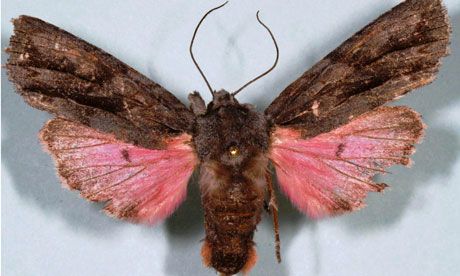
New large pink moth discovered in Arizona

The mountains of southeastern Arizona have been a favorite collecting site for lepidopterists for generations. Yet new species continue to be described at the rate of about three per year. One of the latest discoveries is the largest member of the genus Lithophane, a group of particularly large and beautifully coloured moths. Lithophane leeae has a forewing length 25% larger than the previous record, measuring 25mm, and more extensive and brighter pink coloration. So far known from a single female collected at 7,700ft elevation in mid-June in the Chiricahua Mountains, this species is predicted to feed on pine, like related species. Source

Wednesday, June 24, 2009

You can catch MRSA from animals

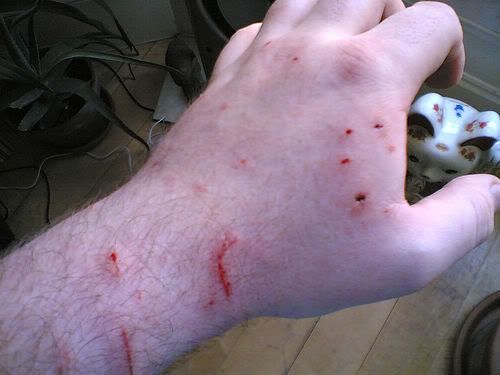
An infectious superbug, a strain of bacteria known as MRSA, which has evolved a resistance to antibiotics, has long plagued hospitals but in recent years has become more common in homes. About two years ago, scientists began to suspect that pets can spread this bacteria. In the July edition of The Lancet Infectious Diseases, Richard Oehler of the University of South Florida College of Medicine and colleagues lay out the latest thinking on MRSA (methicillin-resistant Staphylococcus aureus) and pets. The infections can be transmitted by animal bites and most threaten young children, the researchers note. "MRSA colonization has been documented in companion animals such as horses, dogs, and cats, and these animals have been viewed as potential reservoirs of infection." "Bites to the hands, forearms, neck, and head have the potential for the highest morbidity," the scientists warn. They conclude: "Much more remains to be learned about MRSA and pet-associated human infections." Source Photo from Flickr, by GrahamIX

Monday, June 22, 2009

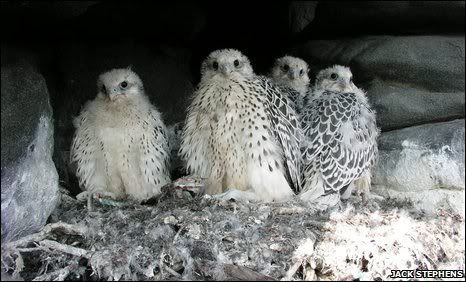
2,500-year-old bird's nest found

A 2,500-year-old bird's nest has been discovered on a cliff in Greenland. The nesting site is still continually used by gyrfalcons, the world's largest species of falcon, and is the oldest raptor nest ever recorded. Three other nests, each over 1,000 years old, have also been found, one of which contains feathers from a bird that lived more than 600 years ago. Like many falcons, gyrfalcons do not build nests out of sticks and twigs, but typically lay eggs in bowl-shaped depressions they scrape into existing ledges or old nests made by other birds such as ravens. Source

Friday, June 5, 2009

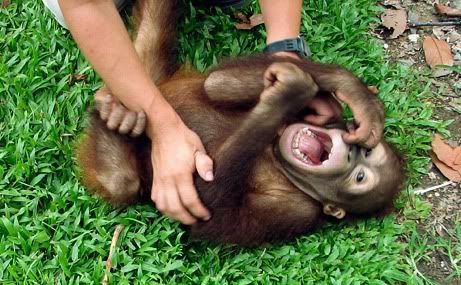
What happens if you tickle a gorilla?

By tickling young gorillas, chimpanzees, bonobos, and orangutans, researchers say they learned that all great apes laugh. Their findings suggest we inherited our own ability to laugh from the last common ancestor from which humans and great apes evolved, which lived 10 to 16 million years ago. Primatologist and psychologist Marina Davila Ross of the U.K.'s University of Portsmouth led a team that tickled the necks, feet, palms, and armpits of infant and juvenile apes as well as human babies. The team recorded more than 800 of the resulting giggles and guffaws. Source (via Boing Boing)

Friday, March 27, 2009

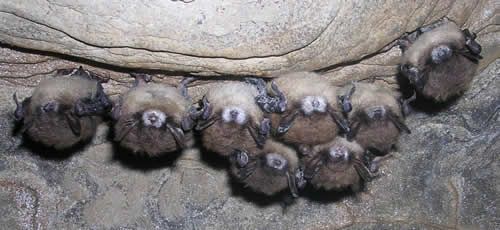
Are cavers spreading lethal bat disease?

The white fungus that appears on bats' noses and wings — so-called white-nose syndrome — has killed more than a half-million bats over the past three winters, but scientists had not been able to figure out how the fungus got into the bat caves and why it spread. Now, they have big clue: Humans, specifically cavers, who "may be spreading the causative agent." Source Photo Credit: Nancy Heaslip, New York Dept. of Environmental Conservation Little brown bats with white-nose syndrome, New York