Dogs aren't the only ones who get heartworms.
Did you know that cats can be affected by this parasite as well? Cats
are not the intended host for heartworms, but they certainly can get
them.
Ann Paws has done some extensive research on this topic and shared it in, "Heartworms Aren't Just For the Dogs". Please read her informative post to learn the symptoms, treatment, and prevention methods of heartworms in felines.
Showing posts with label health. Show all posts
Showing posts with label health. Show all posts
Thursday, November 1, 2012
Heartworms: Not Just for Dogs


Tuesday, October 16, 2012
Guest Post: How to Live With Pet Allergies
Ken Stanfield is a passionate blogger who spends his time researching and writing about respiratory health, healthcare and humanitarianism. He has also been a dog lover for most of his life. He writes currently for the nebulizer systems supplier, JustNebulizers.com.
Adapting to Animals: How to Live With Pet
Allergies
For most pet owners with allergies, the benefits of living
with animal companions outweigh the negative impacts of their allergies. After
all, pets are often just as close and valuable to people as their human family
members are. Whether you’re recently diagnosed with pet allergies or have been
fighting through them for many years, this article should give you some helpful
advice on how to reduce the allergens in your home and create an even better
relationship with your furry friend.
The Truth
Don’t believe the marketing hype—allergen-free dogs and cats
simply don’t exist. Neutered cats and short haired or hairless dogs might emit
less allergens than other animals, but the allergens will still be present to
some degree. In fact, one poodle might cause a greater allergic reaction in a
prospective owner than another poodle from the exact same litter. It’s
important to spend a little bit of time with a few prospective pets before
choosing if it’s at all possible.
Eliminating
Allergens
Now that we’ve established that all pets produce allergens
and that there’s no avoiding them entirely, the only possible option becomes
clear: you’ll have to work around allergens and reduce them when you can. If
you’re dedicated to your pet, think about swapping carpets out with hardwood
floors or linoleum. Also, reduce the amount of upholstered furniture in your
home. Doing this will help keep your pet’s hair from getting collected. In
addition to these steps, make sure that your pets are bathed and groomed
regularly. If possible, have someone do this for you so that any of the fur
pulled loose doesn’t irritate your allergies. Healthy pets emit less dander, so
make sure that your animals are on a healthy diet and have their own designated
sleeping areas as well. Whenever possible, wash your hands thoroughly after
petting your animals. If you’re still having problems, you might invest in a
HEPA air filter for your home.
Additional
Tactics
You might have already looked into it, but it’s still worth
mentioning: make sure your pet is the actual reason for your allergies.
Eliminating other allergens in your home such as dust, mold and certain foods
will go a long way toward your respiratory health as well. As allergens build
up, your body has a harder time of fighting them individually. If it’s only
dealing with a little pet dander, your life should be considerably easier. You might also consider not allowing your
pets into your bedroom to create an allergy-proof sleeping environment for
yourself. Clean your home as often as possible and avoid strong scented
products or any cleaning solution that contains perfume. Make sure your central
heating and air units are well maintained by a professional.
There are, of course, other factors to consider when
simultaneously living with a pet and living with allergies. Making small
changes in the way you care for your pet and maintain your home should go a
long way toward making your life easier. There’s absolutely no need to give up
your furry friend or give up hope. Just explore these suggested avenues to
greatly reduce the amount of pet allergens in your home.
Tuesday, October 9, 2012
Oh, how nice - Thank you!
Just received the following, wonderful email ...
Hi Julie,
I am pleased to inform you that The Pet Blog has been recognised for excellence due to the contribution its top quality editorial offers the pet health world.
KwikMed are a leading health (care) provider and and are regularly covered in the mainstream national press for their professional, modern approach to healthcare. They are one of just two fully licensed online pharmacies in the USA. This year, our specialist panel of judges have reviewed hundreds of different sites from across the internet before hand-picking the very best for each category. The Pet Blog is among the elite selection of awardees that our judges felt made a real contribution to the pet health category and you can see your site in lights here:
http://www.kwikmed.org/36-exceptional-pet-health-sites/
Please accept my warmest congratulations, as well as our appreciation of your continued hard work and excellent quality editorial. I hope it continues for many years to come! We’re rolling the awards out fully with our members soon and hopefully it will bring some deserving attention your way.
There are some great winners on the list, including some sites that have less exposure than your site does, and were selected by our judging panel for their unique perspective and contribution. It would be great for all if you let your readers know where they can find some great resources on pet health by linking to the awards. Either way it would be great to hear from you.
Once again, I would to send you my congratulations for your well-deserved recognition.
Best regards,
Lily
Thank you - how nice to be recognized!
Julie
Monday, October 1, 2012
Guest Post: Tips for pet care
This guest post was provided to you by Vet Medic. Vet Medic offers
identical products that you obtain from your vet and have a wide range
of Frontline and Drontal products and also offers you to talk to certified
veterinary pharmacists if you need any advise or help for free.
Pets are important members of the family. They require care
in order to be happy and healthy. If you
are a new and proud owner of a cat or a dog, you ought to read the article.
Following these tips will ensure that your pet will live a very happy life.
Drink and Food
You need to ensure that your pet is given fresh water every day. Do not feed cat food to dogs or dog food to cats. Feeding the pet twice a day is optimal for its health. Younger kittens and puppies should be fed three or four times a day.
You need to ensure that your pet is given fresh water every day. Do not feed cat food to dogs or dog food to cats. Feeding the pet twice a day is optimal for its health. Younger kittens and puppies should be fed three or four times a day.
Medical help
Providing your pet with a natural supplement daily will do wonders to boost its immune system. Supplements can help your pet to resist minor diseases. Keep ticks and fleas away by using a natural health solution.
Providing your pet with a natural supplement daily will do wonders to boost its immune system. Supplements can help your pet to resist minor diseases. Keep ticks and fleas away by using a natural health solution.
Exercise
Ideally, dogs need exercise twice a day. If you can’t provide exercise twice a day, make sure you allow it to exercise at least once in the evening. If you have a secured backyard, allow your pet to play in it. You can get your daily dose of exercise by playing with your dog. Cats, too, need frequent play to keep them healthy and active.
Ideally, dogs need exercise twice a day. If you can’t provide exercise twice a day, make sure you allow it to exercise at least once in the evening. If you have a secured backyard, allow your pet to play in it. You can get your daily dose of exercise by playing with your dog. Cats, too, need frequent play to keep them healthy and active.
If you think your cat
or dog is getting fat, cut down its food. If you notice a lack of appetite,
call your veterinarian. You can also get online
vet help.
Wednesday, August 29, 2012
West Nile Death Toll Hits 66
At least 66 people have now died in one of the worst West Nile virus outbreaks the US has ever seen.
Infections shot up 40% this week, with a total of 1,590 now having fallen ill, USA Today
reports.
Health officials are warning Americans to do their best to
avoid mosquitoes over Labor Day weekend, particularly in Texas, the
hardest hit state, where 31 have died. Texas officials are pushing what
they call the "Four D's": Use DEET, dress in long sleeves, stay inside at dusk, and drain all standing water.
Source
Yosemite hikers warned of health risk
Vacationers to Yosemite National Park, CA, are getting quite a scare this
week. On Tuesday, 1,700 visitors were informed by officials that they
may have been exposed to hantavirus
and were at risk of developing hantavirus pulmonary syndrome (HPS), a
rare rodent-borne illness that has already claimed the lives of two
national park visitors.
Around 1700 people were alerted by email that those who stayed in the
“Signature Tent Cabins” in Yosemite’s Curry Village from mid-June
through the end of August may be at risk for the disease that causes
flu-like symptoms including fever, aches and chills. The virus, which is
transmitted by rodents such as deer mice, is spread to people who
inhale dust particles that have come in contact with urine, saliva and
feces of infected animals. So far, three cases of the disease have been
confirmed and health officials are investigating a fourth probable case.
Source
Sunday, August 19, 2012
Be careful of these cuddly creatures!
While mosquitoes
and ticks, those pesky harbingers of West Nile, dengue fever, cholera, Lyme disease, and
Kyasanur
fever are
universally hated, it's hard to believe the Earth's more cuddly creatures could
breed evil.
Alexandra Evans has found 13 cuddly creatures to
ruin your next trip to the petting zoo.
Peacocks - dying in droves
in Pakistan's Thar Desert region in an outbreak scientists believe is
linked to Newcastle disease.
Armadillos - beneath their shell these
mammals shield leprosy,
a rare bacterial infection that attacks the skin and nervous system.
Whales - harbor influenza A, a
viral flu strain with the most potential for interspecies transmission.
Monkeys & apes - are "reservoir for human disease." The HIV virus originated
in African monkeys. Strains of malaria, Ebola, and monkeypox virus can be transmitted by monkey and ape populations. Measles, rabies, tuberculosis, salmonellosis, shigellosis, amebiasis,
balatidiasis, herpes B, giardiasis and helminthes are believed to have appeared
first in man's closest relative.
Read more to see what you "might" catch from dogs, cats, prarie dogs, horses, rabbits, guinea pigs and hamsters.
Thursday, August 2, 2012
Bird Flu Has Jumped To Baby Seals
A new strain of avian flu that jumped from birds to mammals is
responsible for the death of more than 160 seals off the New England
coast last year. Scientists say the virus could theoretically pose a threat to human health.
Harbor seals — most of them babies less than 6 months old — began
appearing with severe pneumonia and skin lesions in September of last
year, the researchers said.
Over the next few months, at least 162 dead seals were recovered along the coast from Maine to Massachusetts, they said.
Testing pointed at a new strain of the H3N8 flu virus being called seal H3N8.
Source
Tuesday, July 17, 2012
Exposure to Pets Can Make Young Children Healthier
A new study published online from the journal Pediatrics found that children who had pets as part of their environment during the first year of their lives were on average healthier than children who did not have exposure to pets. The study specifically looked at the impact that the presence of cats and dogs had on the children, and found that when a pet was present during the child's first year, the child on average suffered fewer ear infections and colds, among other health benefits.
Source
Thursday, June 21, 2012
Meat allergies in central Virginia - caused by a tick

The most puzzling part of the sudden breakout of this specific allergy is the delayed reaction that people seem to have to the tick bite.
"You do not get hives until four hours, and you have no idea how strange that is for us as allergists," University of Virginia researcher Dr. Thomas Platts-Mills said. "It's a completely new form of food allergy in which you eat beef or pork or lamb, and three or four hours later, you develop hives."
The hives people with the meat allergy develop aren't docile, either - doctors and patients say they burn and itch with a fiery intensity. In fact, bestselling author John Grisham spent years trying to unwrap the mystery of his sudden and painful allergy to meat.
Source
Saturday, June 16, 2012
Guest Post: How to Care for your Older Dog
Eric Bogard works for Pet Dreams, a designer of high quality, orthopedic memory foam dog beds. He is a fan and advocate of everything Pit Bulls, taking care of his clown in black and white clothing named Pepper. You can find Pet Dreams on Twitter and Facebook.
How to Care for your Older Dog
The old adage holds that a single human year is the equivalent of 7 dog years. Just like with people, however, age is just a number -there are numerous factors that contribute to the physiological aging process, and your dogs' breed is a good place to start. As a general rule of thumb small dogs live longer than large ones, though all breeds have their own aging traits and predispositions for certain diseases and health issues.
Aging is of course inevitable and part of life. Like with grandpa, as your dog gets older you're likely to see graying in the muzzle, reduced hearing and sight, deteriorating strength and muscle mass, increased time sleeping, and general slowing down. To provide the upmost comfort for your senior dog and ensure he or she lives as long as possible follow these general guidelines. Of course, consult with your veterinarian with any large adjustments and always ensure your dog receives regular checkups.
Provide Proper Nutrition
As your dog ages his or her nutritional needs will change. Aside from requiring fewer calories senior dogs will need additional fiber to ensure gastrointestinal health, all while maintaining optimal levels of protein and fat. Many commercial foods now offer senior formulas -it is vet recommended that you purchase the highest quality food you can afford as inferior dog foods can be difficult to digest, are often inconsistent, and may be nutritionally inferior to higher quality foods.
Ensure Proper Exercise
The correct level and amount of exercise will help ensure your dog stays fit and at a proper weight, toned, healthy, and stimulated. With reduced energy, however, you'll need to adjust accordingly the frequency and intensity of the activity. Likewise, if your dog is stiff or has arthritis (see below) you'll need to make further adjustments including varying the type of exercise and making access to the outdoors as easy as possible.
Manage Stiffness and Arthritis
Unfortunately, as arthritis is often inevitable the name of the game is pain management. So your dog doesn't need to suffer there are several effective drugs that your vet can prescribe to provide comfort. Additionally there are many high quality supplement available on the market including Glucosamine and Vitamin C.
There are several additional measures that you can easily follow. For example, if your dog has difficulty managing stairs or getting in and out of the car use ramps and other tools to ensure easy access to the outdoors and areas of the house. Additionally, orthopedic dog beds, made with memory foam, are a relatively new product that are specifically designed to relive joint pain by providing support, reliving pressure points, and improving circulation.
Look to the Teeth
The root of many health issues can, believe it or not, be traced to the teeth. Common in most older dogs, poor dental care can lead to tartar, inflammation of the gums, and gingivitis. This very bacteria can negatively impact the entire body including the major organ systems. Accordingly, proper dental care and cleaning is pivotal to the health of your dog. Depending on the dental severity your veterinarian will make suggestions ranging from general cleaning to more intrusive procedures.
It goes without saying, but unconditional love should come first and foremost to keep your dog happy and satisfied as he or she enters a new phase in their life!
Friday, June 1, 2012
White-nose fungus threatens gray bats

White-nose syndrome has killed millions of other species of bats as they hibernated in caves and mines in the northeastern United States, but the gray bat is even more susceptible, the U.S. Fish and Wildlife Service said.
They could potentially be wiped out in just a couple of years.
Source
Tuesday, March 27, 2012
Top 10 Pet Toxins of 2011
Both known and unknown toxins can be found hiding in our houses and yards. In 2011, the ASPCA Animal Poison Control Center (APCC) in Urbana, IL, fielded more than 165,900 phone calls about pets exposed to poisonous substances.
Here are the top ten:
1. Prescription Human Medications
2. Insecticides
3. Over-the-Counter Human Medications
4. People Food
5. Household Products
6. Veterinary Medications
7. Rodenticides
8. Plants
9. Lawn and Garden Products
10. Automotive Products
If you have any reason to suspect your pet has ingested something toxic, please contact your veterinarian or the Animal Poison Control Center’s 24-hour hotline at (888) 426-4435.
Source
Thursday, February 2, 2012
10 Diseases Kids Can Catch from their Pets
Kids tend to be more hands-on with pets than the adult members of the family, and to also have poorer hygiene habits. As a result, they’re more likely to end up on the receiving end of an illness that can be passed from animals to humans.
Babysitting Jobs lists ten diseases which can originate with the household pet, but affect the entire household.
While some of these diseases are quite rare, others are relatively common. Making sure that children wash their hands after handling a pet or its waste is absolutely the most effective method for preventing these illnesses.
Read more
Thursday, May 5, 2011
Found on the web
Animal-Human Leprosy Link Found People infected with leprosy in the United States often have the same previously unknown strain of the microbe Mycobacterium leprae that is also carried by armadillos. Elderly Animals - in pictures Photographer Isa Leshko has set out to document old age in the animal kingdom with a series of beautiful photographs. 10 Amazing Zoos Every Animal Lover Should See Instead of going back to your local zoo again and again, why not see what else the world has to offer? Here are 10 amazing zoos every animal lover should see.
Wednesday, April 27, 2011
Hairballs!
Friday, April 29, is National Hair ball Awareness Day!
What better way to spread the word than by coughing up a virtual hairball on all your Facebook friends?
If you’re a cat owner, you’ve surely fallen victim to a hairball attack. There’s nothing worse than discovering that little present from your pet in the middle of the night in your bare feet. National Hairball Awareness Day provides a platform for highlighting this issue and educating cat owners of the solutions Science Diet offers.
You can help spread the word for Hill's Hairball Control products by playing and passing on Hill’s Pet Nutrition’s very first Facebook game—Hairball Battle!
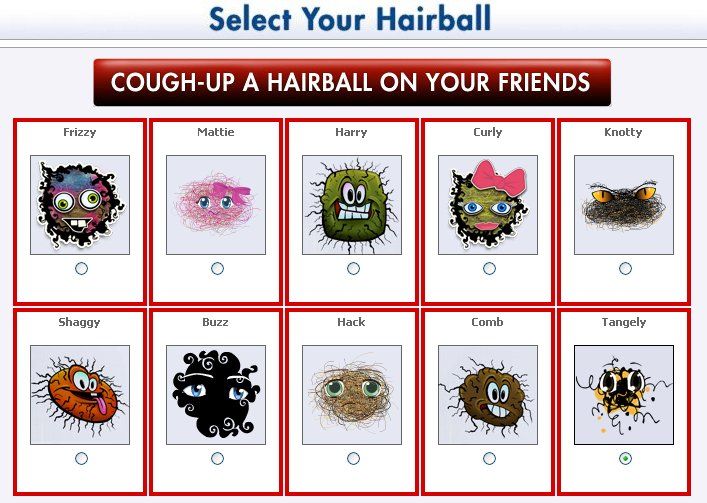 Playing the game is simple. Choose one of the hilarious hairballs and cough them up on your friends! But watch out, they’ll be able to retaliate! Silly, sloppy and a bit disgusting—it’s the most fun friends of felines can have without leaving Facebook!
Play the game by clicking the Battle link below. Then fight to the yucky finish. Watch your step!
http://apps.facebook.com/hairball_battle
P.S. Dog lovers, don’t be shy—you can play, too!
Seriously, if you would like more information about hairballs and hairball control, please visit Hill's® Science Diet® Hairball Control Formulas.
Playing the game is simple. Choose one of the hilarious hairballs and cough them up on your friends! But watch out, they’ll be able to retaliate! Silly, sloppy and a bit disgusting—it’s the most fun friends of felines can have without leaving Facebook!
Play the game by clicking the Battle link below. Then fight to the yucky finish. Watch your step!
http://apps.facebook.com/hairball_battle
P.S. Dog lovers, don’t be shy—you can play, too!
Seriously, if you would like more information about hairballs and hairball control, please visit Hill's® Science Diet® Hairball Control Formulas.
Tuesday, April 12, 2011
'Naked' penguins have scientists perplexed
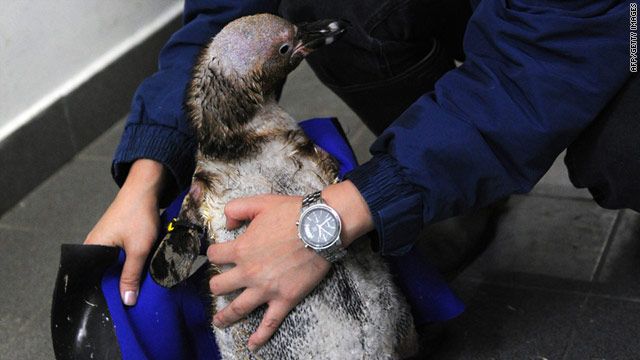
A mysterious ailment is causing penguins to lose their feathers, according to researchers at the Wildlife Conservation Society.
The condition, called feather-loss disorder, has been seen in penguin chicks in both sides of the Atlantic Ocean the past few years and is featured in a recent edition of the journal "Waterbirds," the release said.
While scientists don't know what could cause a penguin to go "naked," possible culprits include genetics, nutrient imbalances, thyroid disorders or pathogens.
“We need to conduct further study to determine the cause of the disorder and if this is in fact spreading to other penguin species,” Dee Boersma, who has studied Magellanic penguins, said in the release.
Read more ...Monday, April 11, 2011
Shar-Pei dogs shed light on human Fever Syndromes
 The gene mutation responsible for the wrinkled skin of Shar-Pei dogs is also linked to a periodic fever disorder, a finding that could have important implications for human health, researchers report.
Shar-Pei dogs have a high prevalence of a periodic fever disorder that is similar to inherited autoinflammatory periodic fever syndromes in humans.
The thick, wrinkled skin of Shar-Pei dogs contains an excess of hyaluronan, most likely because of an over-activation of the hyaluronan synthase 2 (HAS2) gene. The fever disorder in the dogs occurs when overproduction of hyaluronan activates the immune system, according to scientists at the Broad Institute in Cambridge, Mass., and Uppsala University in Sweden.
Read more . . .
The gene mutation responsible for the wrinkled skin of Shar-Pei dogs is also linked to a periodic fever disorder, a finding that could have important implications for human health, researchers report.
Shar-Pei dogs have a high prevalence of a periodic fever disorder that is similar to inherited autoinflammatory periodic fever syndromes in humans.
The thick, wrinkled skin of Shar-Pei dogs contains an excess of hyaluronan, most likely because of an over-activation of the hyaluronan synthase 2 (HAS2) gene. The fever disorder in the dogs occurs when overproduction of hyaluronan activates the immune system, according to scientists at the Broad Institute in Cambridge, Mass., and Uppsala University in Sweden.
Read more . . .
Guide to Dog Health Problems and Dog Health Care
A great dog lover, Nancy Crist, has created a very useful website for the rest of us dog lovers, concerned about health issues we might encounter in our pets. Nancy currently owns 10 rescue dogs, and has a non-stop parade of foster dogs, so she has dealt with numerous dog health issues firsthand, and decided it was time to share it with other dog-loving people. Please visit Nancy's website: Dog Health A site devoted to the latest information on dog health issues, written by a mother of 10 dogs and foster mom to an endless parade of canine orphans. Treatment information from both conventional and holistic veterinary medicine is provided. It's a work in progress, so check back often! www.dog-health-today.com
Friday, April 8, 2011
Spending on pets up during lean economic times
Americans may be clipping money-saving coupons and delaying buying a new home, but when it comes to their pets they're spending more than ever, according to a new survey. Between trips to the vet, specialty foods, treats and toys, pet insurance and even parties, Americans have no compunction about opening up their wallets. Between two and five percent of pet owners said they spent more on their pets last year, according to the poll by the non-profit American Pet Products Association (APPA). Americans are so concerned about their pets that 16 percent of dog owners and 13 percent of cat owners said their animal's medical treatment would take priority over their own. Read more ...
Subscribe to:
Posts (Atom)