Showing posts with label bats. Show all posts

Tuesday, November 20, 2012

Just a little batty


Zeke the baby Variable Flying Fox was born recently at Lubee Bat Conservancy.

Bats make up one fifth of all  mammals (1,116 species). They are among the most endangered of the world's creatures, primarily because much of their habitat has been eliminated by human encroachment or because they are over hunted for food or persecuted as pests or disease carriers. Their loss has serious consequences for the ecosystems to which they belong because bats are important seed dispersers and pollinators for many native flowering plants, and key insect predators globally.

Source

Monday, July 30, 2012

Friday, July 6, 2012

Friday, June 1, 2012

White-nose fungus threatens gray bats

The deadly white-nose disease has been detected in endangered gray bats, federal wildlife officials announced,  raising a very real possibility that the species could be wiped out within two years.

White-nose syndrome has killed millions of other species of bats as they hibernated in caves and mines in the northeastern United States, but the gray bat is even more susceptible, the U.S. Fish and Wildlife Service said.

 They could potentially be wiped out in just a couple of years.

Source

Monday, March 5, 2012

Friday, May 13, 2011

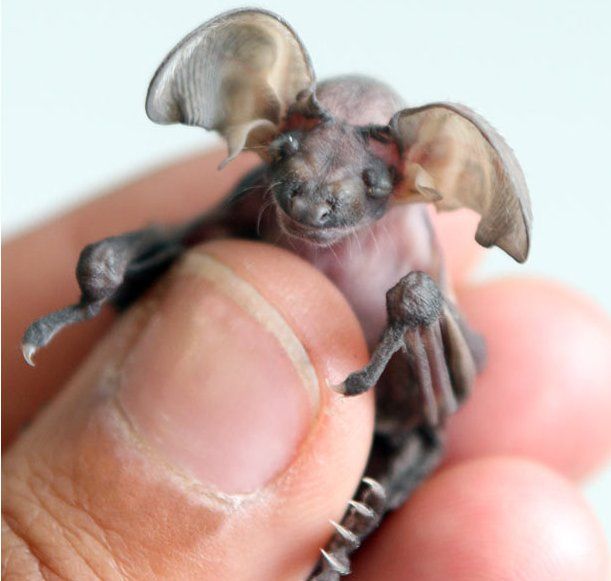
Cute or not? Baby Long-eared bat

Picture: RICHARD AUSTIN

Thursday, April 14, 2011

Found on the Web

Underwater Aliens: The Beauty Down Below The animals of the deep ocean might as well be from a different planet. Here are some beautiful images of the some of the strangest creatures on earth. Deadly Bat Disease Spreading West White-nose syndrome has killed more than a million bats in the United States. Read about the startling crisis that's threatening whole populations of these creatures of the night. 10 Humane Ways to Discipline Your Dog Ten humane, and widely used, training techniques for dogs.

Wednesday, March 9, 2011

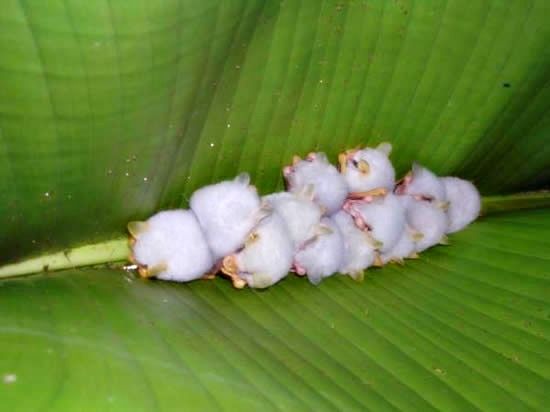
The cutest bats in the world

The tiny White Bats of Honduras are among the cutest rodents on Earth. The Honduran white bat is the smallest fruit-eating bat in the New World, and is found from eastern Honduras to western Panama. This species commonly roosts in tents made by biting along the large, central midrib of Heliconia or banana plant leaves. The wing membrane between the second and third fingers is translucent, so that the bats can fold their wings over their body and still watch for predators. The natural tent protects the White Bats from rain and predators and they only take flight when their home is no longer safe. The small bats live in colonies of up to six individuals, one male and his harem of females. Photo credit: #1 #2

Sunday, January 9, 2011

Orphaned bat epidemic in Australia

Torrential rain has brought chaos to Australia, and not just to the humans who live there. Australian Bat Clinic and Wildlife Trauma Centre director Trish Wimberley and her carers have helped save 130 orphaned bats on the Gold Coast in past weeks. They saved 350 young bats during the 2008 storm season but this year think there's more going on than just wild weather. Carers have visited several bat 'camps' on the coast in recent weeks to find four-week-old babies on the ground covered in maggots and fly eggs. Trish said: 'They're coming down to feed on the ground. That makes them vulnerable. It's not a natural occurrence and shows there is trouble in the environment. 'Bats are a barometer to what is going on in the environment. They're our canaries down the coal mine'. Source

Monday, January 3, 2011

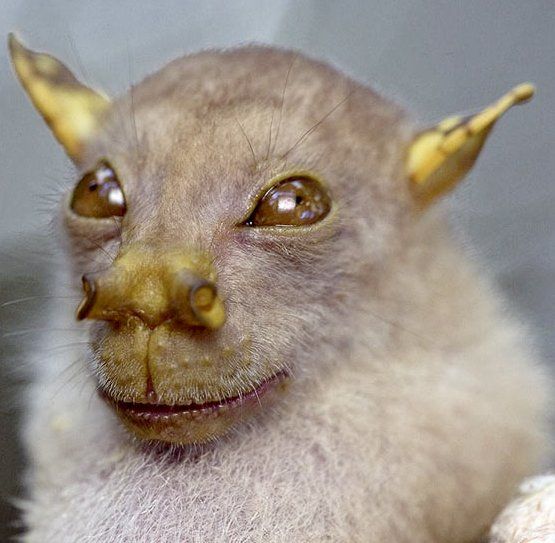
Cute or not? Tube-nosed fruit bat

Picture: Piotr Naskrecki / iLCP

Monday, March 30, 2009

Friday, March 27, 2009

Are cavers spreading lethal bat disease?

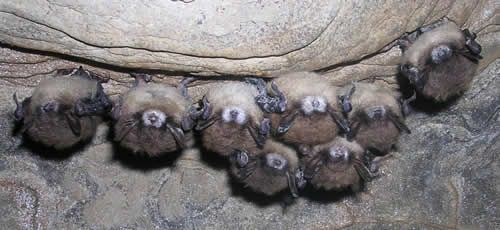
The white fungus that appears on bats' noses and wings — so-called white-nose syndrome — has killed more than a half-million bats over the past three winters, but scientists had not been able to figure out how the fungus got into the bat caves and why it spread. Now, they have big clue: Humans, specifically cavers, who "may be spreading the causative agent." Source Photo Credit: Nancy Heaslip, New York Dept. of Environmental Conservation Little brown bats with white-nose syndrome, New York

Monday, January 26, 2009

Wednesday, December 3, 2008

300 flying foxes rescued in Australia

The future of a colony of fruit bats has been put at risk after hundreds of pups were abandoned by their mothers in heavy storms. More than 300 infant grey-headed flying foxes are being cared for at a bat hospital since they were left to fend for themselves in the last week. Most are suffering from hypothermia and deydration, and many have been attacked by swarms of flies. Source: Metro

Wednesday, October 8, 2008

Duuuuh

About 90 elementary school students in Montana have started a series of rabies shots after a parent let them touch a dead bat that was later confirmed to be diseased. The mother of two students gave presentations in five classrooms and allowed the kids to touch the dead bat last week. She offered each student who touched the bat a sanitary wipe. The exposed students will receive six shots of anti-rabies vaccine. Source: AP

Monday, March 31, 2008

Monday, December 17, 2007

I wonder ...

I found this photo at My House Rabbit's Blog, but ... I'm not so sure that those are rabbits. Don't the ears look kind of bat-ish? And I wonder what the occasion was. Couldn't be Easter, everyone knows there's only ONE Easter Bunny!

Saturday, November 24, 2007

Cute Baby Fruit Bats

Baby bats whose colony has been destroyed by poisonous ticks are being raised in a sanctuary in northern Queensland.

Tuesday, October 16, 2007

'Bite Me' Kitchen Linens

Perfect for those of us not really crazy about domestic activities. (via)

Saturday, September 22, 2007

"Nonexistent" Flying Fox Discovered

This unusual species of flying fox was recently discovered in the Philippines not long after it was deemed not to exist. Jake Esselstyn, a biologist with the University of Kansas, was among a team of researchers that found the animal, a type of fruit bat, last year while surveying forest life on the island of Mindoro. (via)