Claim: Flying penguins found by BBC program.
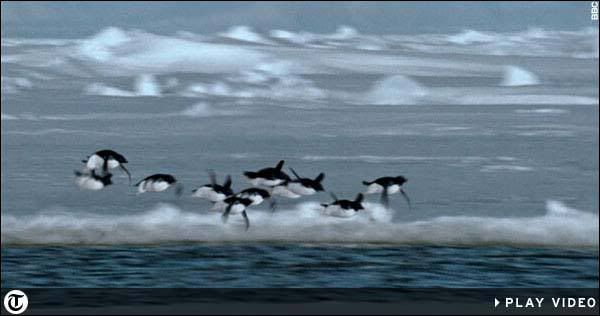 These penguins not only take flight from the Antarctic wastes, but fly thousands of miles to the Amazonian rain forest to find winter sun.
Tuesday, September 30, 2008
Internet Hoaxes: Penguins, Part Two


You Eat What You Touch
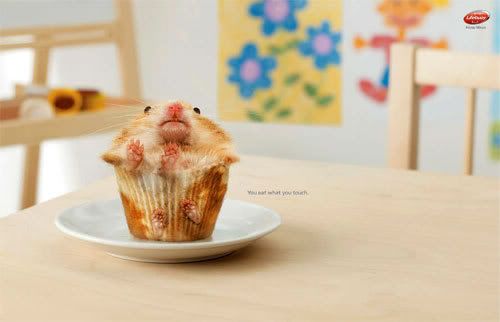
 Hand soap brand Lifebuoy takes aim at our increasingly germaphobic society with this new ad campaign. “You eat what you touch” is their tagline.
These surreal images of a kitten croissant and a hamster muffin are not creepy breakfasts made from pets, but are instead meant to stress the company’s message of hand-washing hygiene.
It is a creative way to get attention and perhaps even encourage non-germaphobes into thoroughly washing up before they eat.
The ads were created by the advertising agency Lowe of Jakarta, Indonesia.
(via Trendhunter)
BTW
Lifebuoy is a brand of soap was originally marketed by Lever Brothers in England beginning in 1895.
The term "B.O.", short for "body odor", was coined by Lifebuoy for an advertising campaign. The Lifebuoy radio ad, parodied by several Warner Brothers' Looney Tunes cartoons, used a foghorn-type sound to create the "B.O." sound. (wiki)
Hand soap brand Lifebuoy takes aim at our increasingly germaphobic society with this new ad campaign. “You eat what you touch” is their tagline.
These surreal images of a kitten croissant and a hamster muffin are not creepy breakfasts made from pets, but are instead meant to stress the company’s message of hand-washing hygiene.
It is a creative way to get attention and perhaps even encourage non-germaphobes into thoroughly washing up before they eat.
The ads were created by the advertising agency Lowe of Jakarta, Indonesia.
(via Trendhunter)
BTW
Lifebuoy is a brand of soap was originally marketed by Lever Brothers in England beginning in 1895.
The term "B.O.", short for "body odor", was coined by Lifebuoy for an advertising campaign. The Lifebuoy radio ad, parodied by several Warner Brothers' Looney Tunes cartoons, used a foghorn-type sound to create the "B.O." sound. (wiki)
Monday, September 29, 2008
Internet Hoaxes: Penguins, Part One
Claim: You can buy a [living] penguin on-line from penguinwarehouse.com.
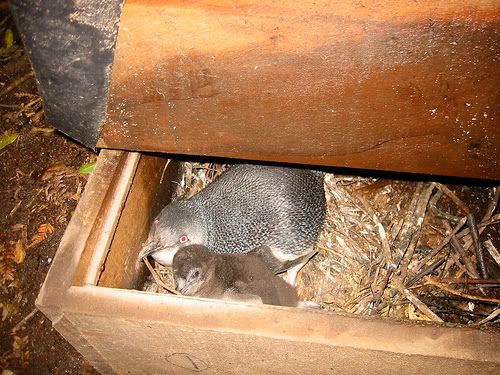 Status: False.
Source: Snopes
Photo from Flickr, by Mollivan Jon
Status: False.
Source: Snopes
Photo from Flickr, by Mollivan Jon
Unexpected transformations
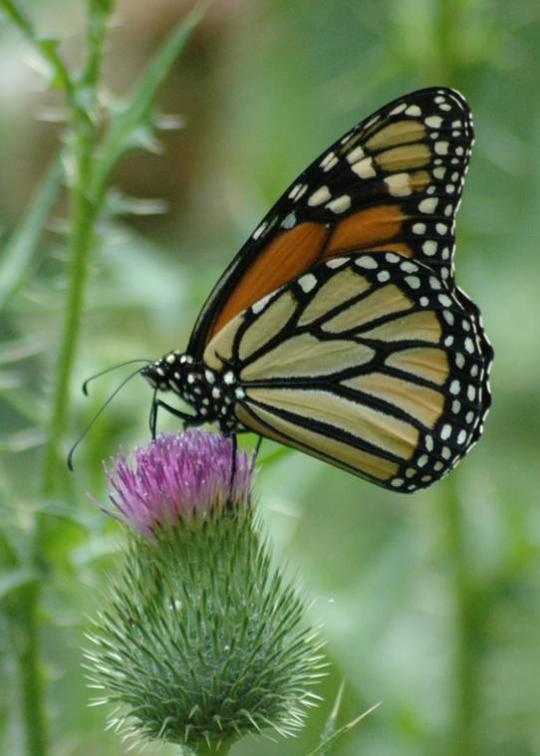
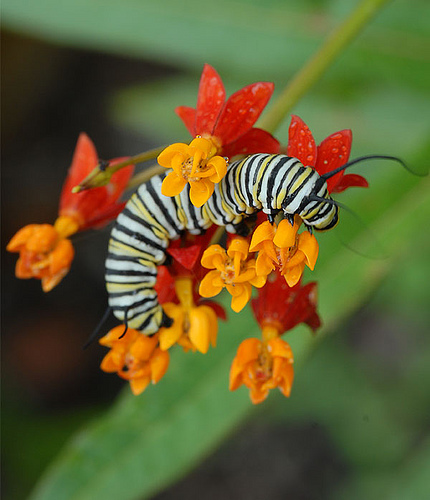 "There once was an ugly duckling," goes the old song. This could not be more true of these stunning butterflies and their most peculiar caterpillars. Another opportunity to scratch your head at the vagaries of Mother Nature, take a look at this pictorial proof of butterfly beauty and caterpillar creepiness!
Sunday, September 28, 2008
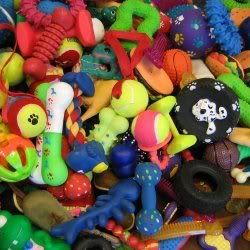
Free dog toys at i-pets.com
CUSTOMER APPRECIATION SPECIAL
FREE TOY with purchase
Order $40.00 or more at i-pets.com and they'll throw in a toy valued at $2.00 or greater.
Saturday, September 27, 2008
Friday, September 26, 2008
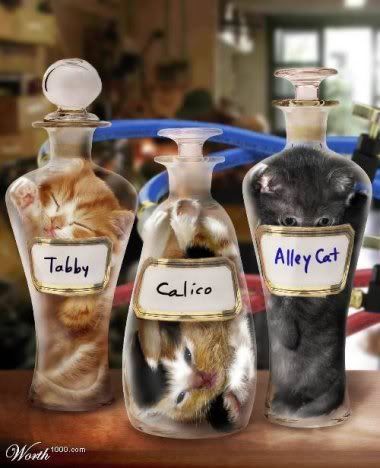
Internet Hoaxes: Cats, Part Five
Thursday, September 25, 2008
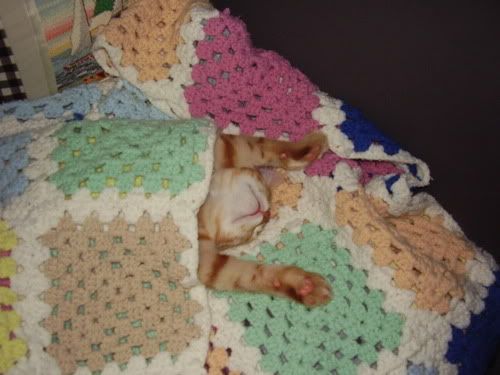
Photography by Seth Casteel
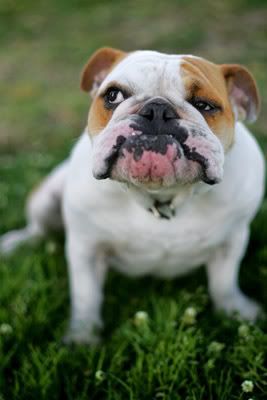 More in the gallery at Seth's website Little Friends Fine Art Pet Photography.
(via Dog Art Today)
More in the gallery at Seth's website Little Friends Fine Art Pet Photography.
(via Dog Art Today)
Internet Hoaxes: Cats, Part Four
Claim: Photograph shows an enormous 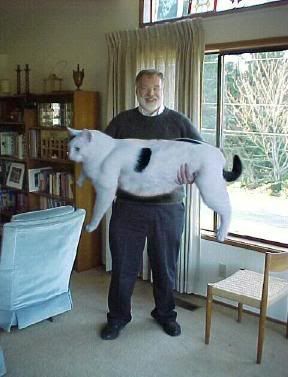 Status: False.
Source: Snopes
Status: False.
Source: Snopes
Wednesday, September 24, 2008
Internet Hoaxes: Cats, Part Three
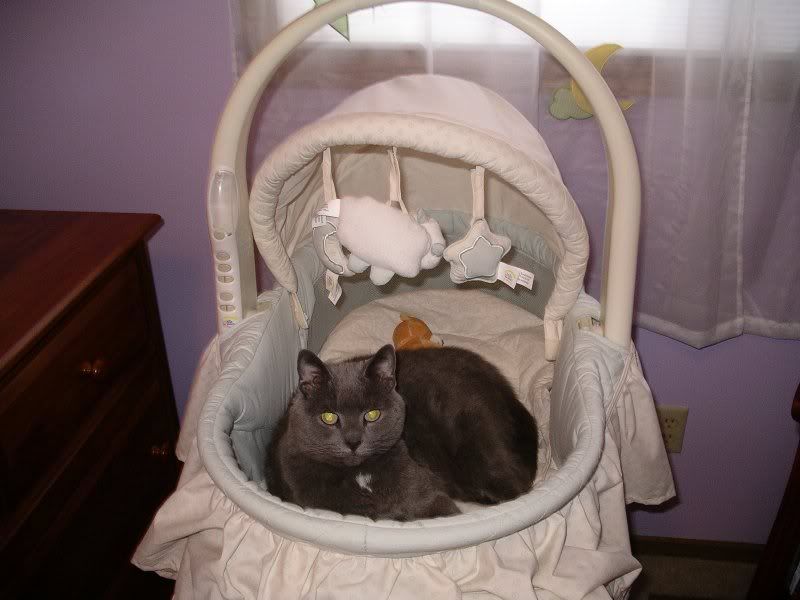
Claim: Homeowners discover a furtively flushing feline is the source of their huge water bills. Status: Real video; inaccurate description. Source: Snopes
Tuesday, September 23, 2008
Internet Hoaxes: Cats, Part Two
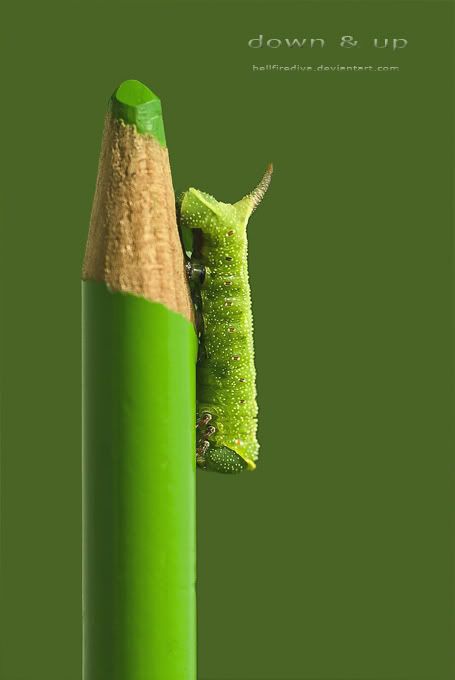
Claim: Photograph shows a cat jumping out of a raft.
 Status: False.
Source: Snopes
Status: False.
Source: Snopes
Monday, September 22, 2008
Internet Hoaxes: Cats, Part One
Claim: Photographs show a variety of "painted cats."
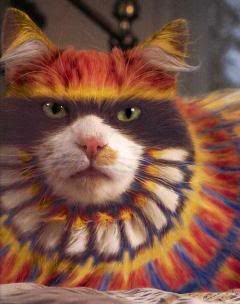
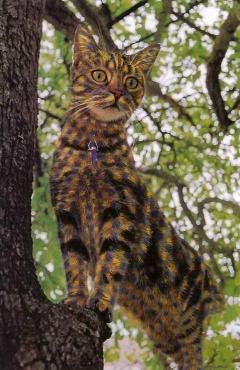
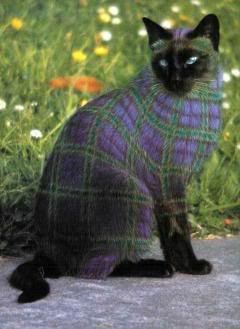
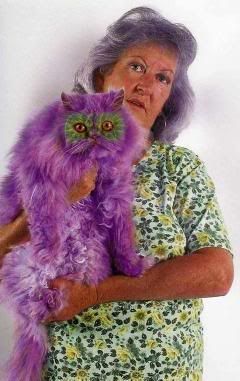 Status: False.
Source: Snopes
Status: False.
Source: Snopes
Friday, September 19, 2008


Internet Hoaxes: Dogs, Part Seven
Claim: Photograph shows a 115-pound coyote killed in New York.
 Status: Real picture; inaccurate description.
Reference: Snopes
Status: Real picture; inaccurate description.
Reference: Snopes
Thursday, September 18, 2008

Photography by Staffan Windstrand
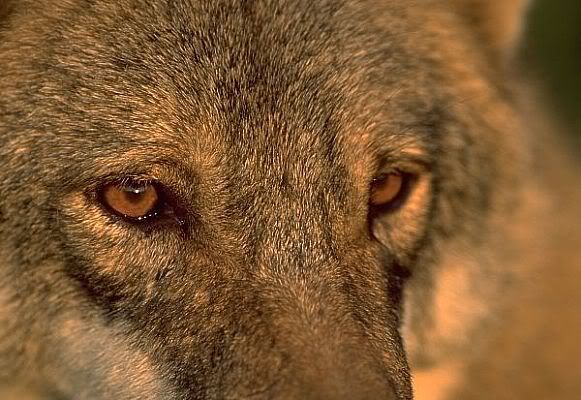 Since 1998 Staffan Windstrand has been very active in a five-year media project (together with friends and colleagues Magnus Elander and Johan Lewenhaupt), called ”The Scandinavian Big Five”, in which they try to cover all aspects of the five large Scaninavian carnivores – the wolf, the bear, the lynx, the wolverine – and man.
Man being the by far most common, most distributed, most dangerous and most ruthless of them…
There are many more wonderful nature photos at the Staffan Windstrand Gallery.
Since 1998 Staffan Windstrand has been very active in a five-year media project (together with friends and colleagues Magnus Elander and Johan Lewenhaupt), called ”The Scandinavian Big Five”, in which they try to cover all aspects of the five large Scaninavian carnivores – the wolf, the bear, the lynx, the wolverine – and man.
Man being the by far most common, most distributed, most dangerous and most ruthless of them…
There are many more wonderful nature photos at the Staffan Windstrand Gallery.
Internet Hoaxes: Dogs, Part Six
Claim: Thousands of Japanese pet owners were victimized by swindlers who sold them sheep and told them the animals were poodles.
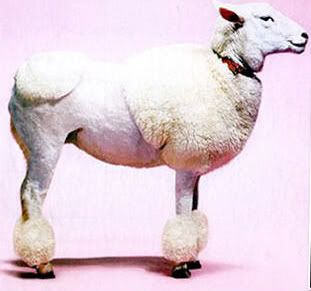 Status: False.
Reference: Snopes
Status: False.
Reference: Snopes
Wednesday, September 17, 2008
Internet Hoaxes: Dogs, Part Five
Claim: Photograph shows fireman receiving kiss of gratitude from a Doberman he had just rescued from a house fire.
 Status: Real picture; inaccurate description.
Reference: Snopes
Status: Real picture; inaccurate description.
Reference: Snopes
Tuesday, September 16, 2008
Junior the monkey
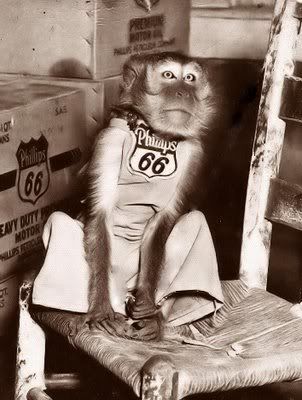 There's a wonderful post at Old Picture of the Day about Junior, who belonged to the author's grandfather.
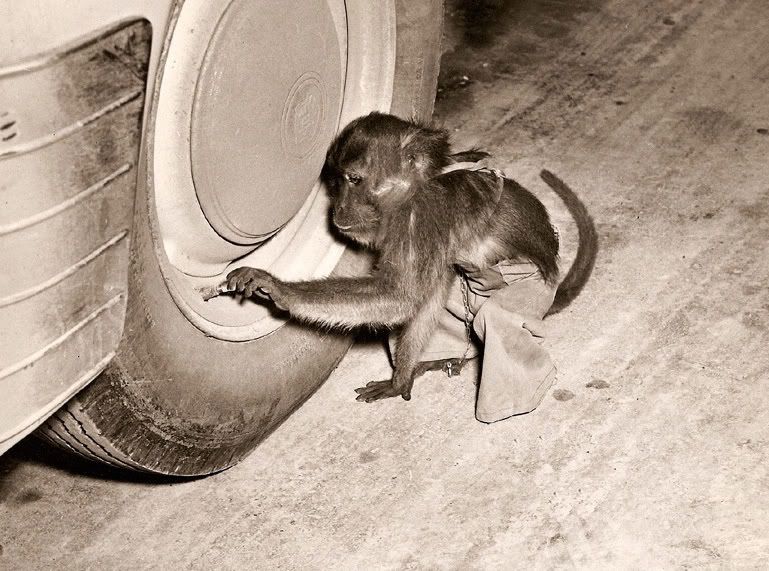
Junior, acquired because of a practical joke, became a member of the family and an asset in their gas station business.
Junior loved his job, and enjoyed all the attention he got. He got along well with his coworkers, and he never complained about anything. He received excellent marks in all his reviews, and he was named employee of the month on several different occasions. He was never late for work, and always was the first to jump up when a customer drove in. He really was one of the boys down at the station.
Here's another photo of Junior working at the gas station.
There's a wonderful post at Old Picture of the Day about Junior, who belonged to the author's grandfather.
Junior, acquired because of a practical joke, became a member of the family and an asset in their gas station business.
Junior loved his job, and enjoyed all the attention he got. He got along well with his coworkers, and he never complained about anything. He received excellent marks in all his reviews, and he was named employee of the month on several different occasions. He was never late for work, and always was the first to jump up when a customer drove in. He really was one of the boys down at the station.
Here's another photo of Junior working at the gas station.
Internet Hoaxes: Dogs, Part Four
Claim: Photograph shows a fox amidst a group of dogs.
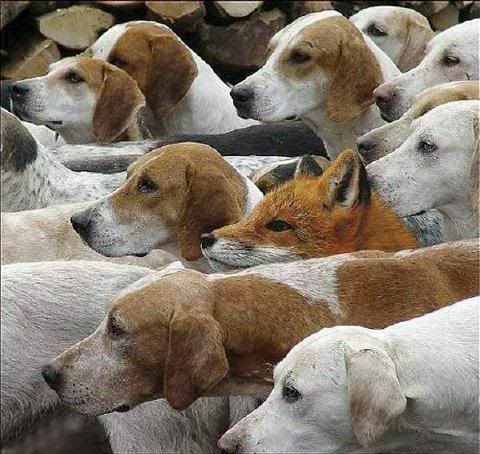 Status: False.
Reference: Snopes
Status: False.
Reference: Snopes
Monday, September 15, 2008
Internet Hoaxes: Dogs, Part Three
Claim: Photograph shows Brutus, a canine Medal of Honor recipient.
 Status: False.
Reference: Snopes
Status: False.
Reference: Snopes
Saturday, September 13, 2008
Friday, September 12, 2008

Rare blond hedgehog
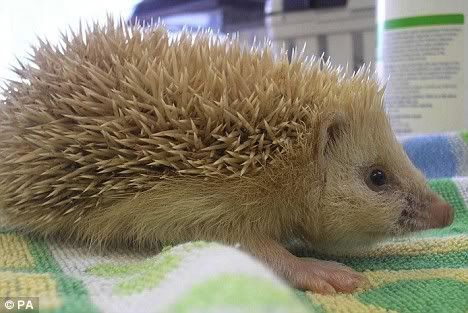 Dr Andrew Kelly, manager of RSPCA in Cheshire, said: "We receive around 600 hedgehogs a year at Stapeley Grange, often orphaned juveniles, but we've never had a blonde hedgehog before."
This baby hedgehog, believed to be just a few months old, it was found weak and struggling by a member of the public in Gobowen, Shropshire.
Source: Mail online
Dr Andrew Kelly, manager of RSPCA in Cheshire, said: "We receive around 600 hedgehogs a year at Stapeley Grange, often orphaned juveniles, but we've never had a blonde hedgehog before."
This baby hedgehog, believed to be just a few months old, it was found weak and struggling by a member of the public in Gobowen, Shropshire.
Source: Mail online
Internet Hoaxes: Dogs, Part Two
Claim: A sanctuary for dogs is maintained on a "dog island" off the coast of Florida.
 Status: False.
Reference: Snopes
Status: False.
Reference: Snopes
Hands off! Stinging caterpillars
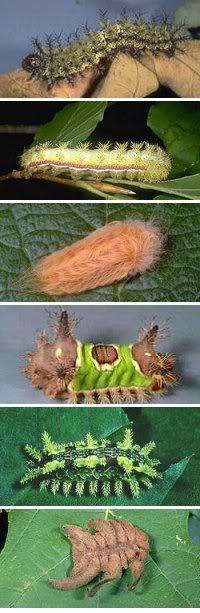 Most people know that bees, wasps, hornets and some ants can sting to defend themselves or their nests. Only a few people realize, usually from first hand experience, that handling some caterpillars can produce some painful results.
Stinging caterpillars possess hollow quill-like hairs, connected to poison sacs, that are used as defensive weapons. When these hairs are touched they break through the skin releasing the poison. Reactions can range from a mild itching to the more severe pain, dermatitis, and even intestinal disturbances.
Most encounters with stinging caterpillars result from accidentally brushing against leaves on which they are feeding. Don't brush it off or slap it with a bare hand. Use a stick or other object to remove it carefully. Hollow spines may break off in clothing or gloves.
No really effective home first aid treatments for caterpillar stings are available. Adhesive tape or transparent tape may be used to pull out some of the broken spines in the sting area. Washing the area thoroughly with soap and water may help remove some of the irritating venom. Prompt application of an ice pack or baking soda may help to reduce pain and prevent swelling. Antihistaminic drugs, often administered for bee and wasp stings, are reportedly ineffective. See a physician if severe reactions occur. Very young, aged or persons in poor health are more likely to suffer severe reaction symptoms.
Source: University of Kentucky
Most people know that bees, wasps, hornets and some ants can sting to defend themselves or their nests. Only a few people realize, usually from first hand experience, that handling some caterpillars can produce some painful results.
Stinging caterpillars possess hollow quill-like hairs, connected to poison sacs, that are used as defensive weapons. When these hairs are touched they break through the skin releasing the poison. Reactions can range from a mild itching to the more severe pain, dermatitis, and even intestinal disturbances.
Most encounters with stinging caterpillars result from accidentally brushing against leaves on which they are feeding. Don't brush it off or slap it with a bare hand. Use a stick or other object to remove it carefully. Hollow spines may break off in clothing or gloves.
No really effective home first aid treatments for caterpillar stings are available. Adhesive tape or transparent tape may be used to pull out some of the broken spines in the sting area. Washing the area thoroughly with soap and water may help remove some of the irritating venom. Prompt application of an ice pack or baking soda may help to reduce pain and prevent swelling. Antihistaminic drugs, often administered for bee and wasp stings, are reportedly ineffective. See a physician if severe reactions occur. Very young, aged or persons in poor health are more likely to suffer severe reaction symptoms.
Source: University of Kentucky
Thursday, September 11, 2008

Photography by Leigh Wiener
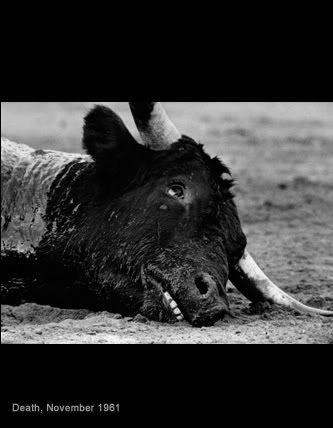 In November 1961, photographer Leigh Wiener shot a bullfight in Tijuana, Mexico, that starkly depicts the brutality of the sport, against the backdrop of amused and horrified spectators that include women in their spring hats, children in their matador costumes.
Tijuana Sunday was published as a photo book in 1989.
In November 1961, photographer Leigh Wiener shot a bullfight in Tijuana, Mexico, that starkly depicts the brutality of the sport, against the backdrop of amused and horrified spectators that include women in their spring hats, children in their matador costumes.
Tijuana Sunday was published as a photo book in 1989.
Cheap labor in LA
They will work long hours over the next week to 10 days and won't collect a pension or charge for working overtime and won't call in sick - and 100 of these laborers cost only $3,000. The cost of human workers would have totaled as much as $7,500.
Leaders of the Los Angeles Community Redevelopment Agency have hired 100 goats to nibble away thick weeds on a steep slope on a weed-choked lot in the Bunker Hill high-rise district.
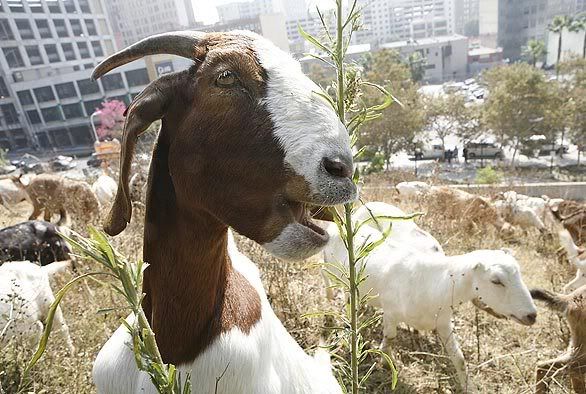 An electrified fence helps corral the goats and keeps them from falling over a retaining wall at the base of the slope. Security guards will be on duty when goat-keeper George Gonzales is not there to watch over the herd.
Source: L.A.Times
(via: L.A. Unleashed)
An electrified fence helps corral the goats and keeps them from falling over a retaining wall at the base of the slope. Security guards will be on duty when goat-keeper George Gonzales is not there to watch over the herd.
Source: L.A.Times
(via: L.A. Unleashed)
Internet Hoaxes: Dogs, Part One
Claim: Photograph shows Hercules, the world's biggest dog.
 Status: False.
Reference: Snopes
Status: False.
Reference: Snopes
Rare albino cobra
Visitors flock to the Madras Crocodile Bank Trust in the Indian city of Chennai because of the remarkable beauty of Goya, an albino cobra.
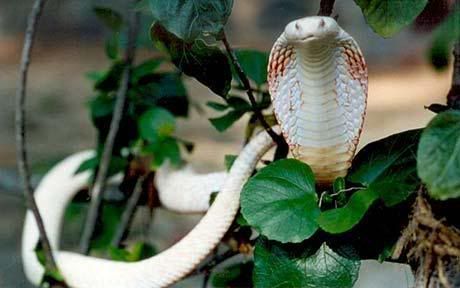 Goya, who is a milky color with shades of pink, was a gift from Dehiwala Zoo in Sri Lanka where they specially breed albino snakes.
The three-and-a-half foot reptile was the only one of his albino siblings to survive, and is now kept on his own in a specially constructed enclosure. Goya spends most of his day indoors due to his sensitivity to light, only venturing outside for his daily meal of five live rats.
Source: Telegraph
Goya, who is a milky color with shades of pink, was a gift from Dehiwala Zoo in Sri Lanka where they specially breed albino snakes.
The three-and-a-half foot reptile was the only one of his albino siblings to survive, and is now kept on his own in a specially constructed enclosure. Goya spends most of his day indoors due to his sensitivity to light, only venturing outside for his daily meal of five live rats.
Source: Telegraph
Wednesday, September 10, 2008
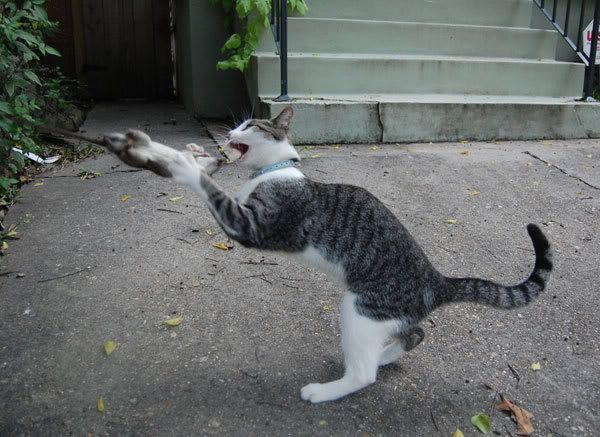
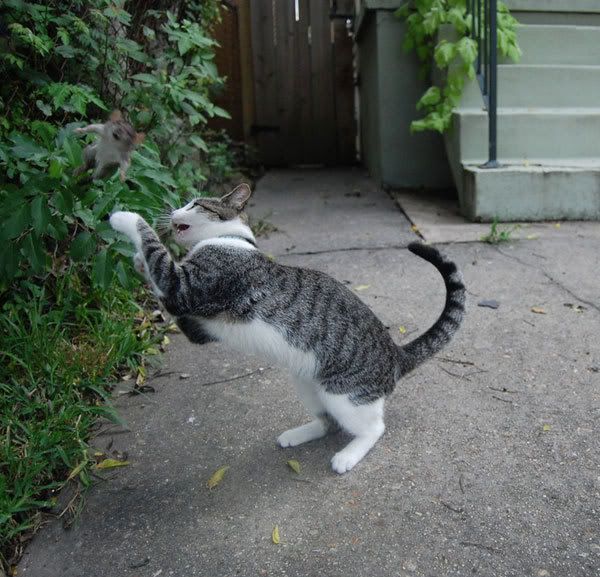
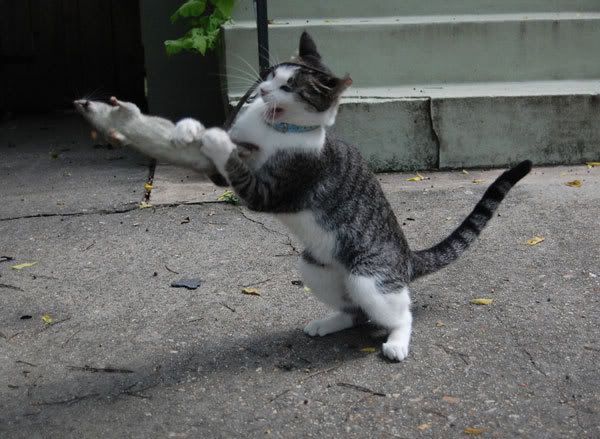
A Little Game of Cat and Mouse

 OK, Ok - here's the one that's NOT shown:
If this cat is anything like my two cats, the mouse got away, totally unharmed, and the cat will now need a rest of several hours and a hearty meal, to be followed by another nap.
(via frinko)
OK, Ok - here's the one that's NOT shown:
If this cat is anything like my two cats, the mouse got away, totally unharmed, and the cat will now need a rest of several hours and a hearty meal, to be followed by another nap.
(via frinko)

Subscribe to:
Posts (Atom)