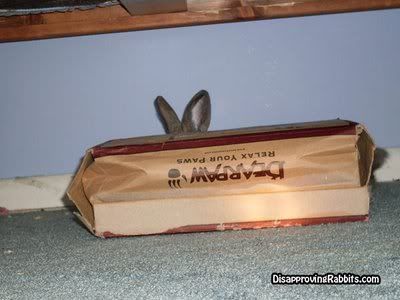
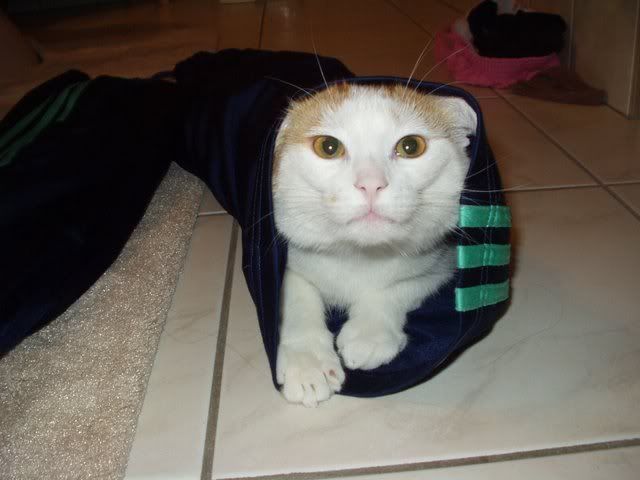
 from Disapproving Rabbits
Tuesday, March 31, 2009


Many bird populations in trouble, report says
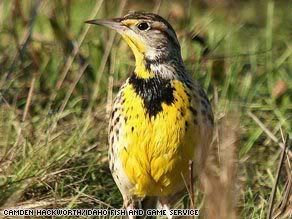 Just as they were when Rachel Carson published 'Silent Spring' nearly 50 years ago, birds today are a bellwether of the health of land, water and ecosystems.
From shorebirds in New England to warblers in Michigan to songbirds in Hawaii, we are seeing disturbing downward population trends that should set off environmental alarm bells.
The declines can be traced to a variety of factors, depending on a bird's particular habitat. But the causes most frequently cited in the report are agriculture, climate change, development and energy, and invasive species.
Source
Just as they were when Rachel Carson published 'Silent Spring' nearly 50 years ago, birds today are a bellwether of the health of land, water and ecosystems.
From shorebirds in New England to warblers in Michigan to songbirds in Hawaii, we are seeing disturbing downward population trends that should set off environmental alarm bells.
The declines can be traced to a variety of factors, depending on a bird's particular habitat. But the causes most frequently cited in the report are agriculture, climate change, development and energy, and invasive species.
Source
Monday, March 30, 2009
The cutest baby elephant
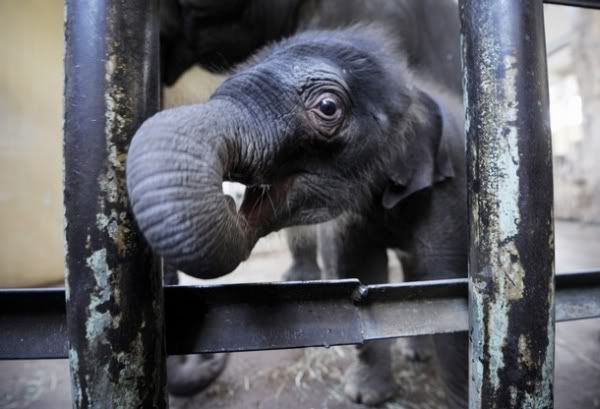
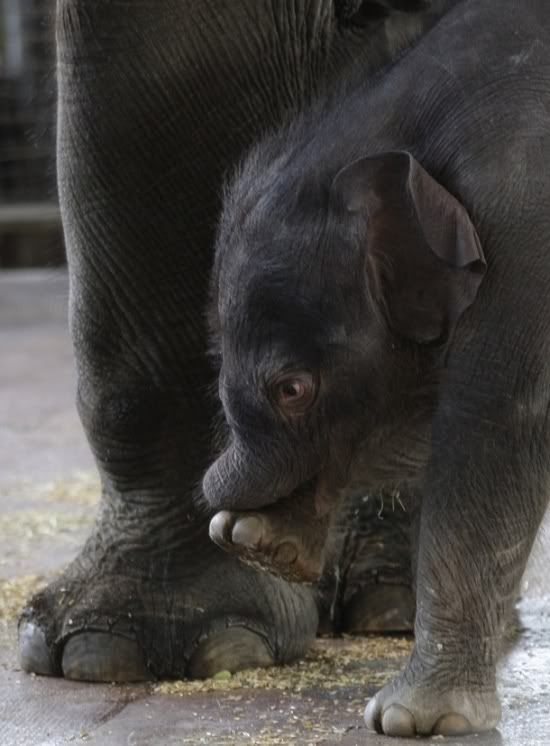
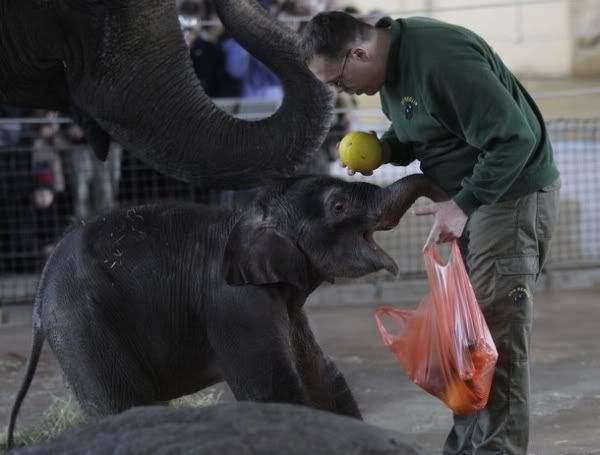 Take your insulin now,
there are 12 more pictures
(via My Modern Metropolis)
Take your insulin now,
there are 12 more pictures
(via My Modern Metropolis)
Just wanted a pizza and a beer
Three people in the central Arizona community of Cottonwood were exposed to rabies after being attacked by a wild bobcat. It all began when the animal attacked and scratched a woman who had gotten out of her car after thinking she had hit it. A short time later, Cottonwood police got a report of a bobcat acting aggressively toward a woman outside a Pizza Hut. Then, about an hour later, the bobcat wandered into the Chapparal Bar on Main Street forcing patrons up on their barstools. Two men who were bitten before police shot and killed the animal in the parking lot. Test later confirmed it was rabid. Source (via Perez Hilton)
Jasmine
I received the following story in today's email ... (Thanks, Lois)
In 2003, police in Warwickshire, England, opened a garden shed and found a whimpering, cowering dog. It had been locked in the shed and abandoned. It was dirty and malnourished and had clearly been abused.
In an act of kindness, the police took the dog, which was a Greyhound female, to the nearby Nuneaton Warwickshire Wildlife Sanctuary, run by a man named Geoff Grewcock and known as a willing haven for animals abandoned, orphaned or otherwise in need.
Geoff and the other sanctuary staff went to work with two aims..to restore the dog to full health and to win her trust. It took several weeks, but eventually both goals were achieved.
They named her Jasmine and they started to think about finding her an adoptive home.
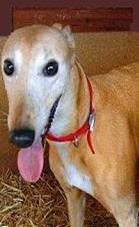 But Jasmine had other ideas.. No-one remembers now how it began, but she started welcoming all animal arrivals at the sanctuary. It wouldn't matter if it was a puppy, a fox cub, a rabbit or any other lost or hurting animal, Jasmine would peer into the box or cage and, where possible, deliver a welcoming lick.
 Geoff relates one of the early incidents. "We had two puppies that had been abandoned by a nearby railway line. One was a Lakeland Terrier Cross and another was a Jack Russell Doberman Cross. They were tiny when they arrived at the centre and Jasmine approached them and grabbed one by the scruff of the neck in her mouth and put him on the settee. Then she fetched the other one and sat down with them, cuddling them."
"But she is like that with all of our animals, even the rabbits. She takes all the stress out of them and it helps them to not only feel close to her, but to settle into their new surroundings.
Geoff relates one of the early incidents. "We had two puppies that had been abandoned by a nearby railway line. One was a Lakeland Terrier Cross and another was a Jack Russell Doberman Cross. They were tiny when they arrived at the centre and Jasmine approached them and grabbed one by the scruff of the neck in her mouth and put him on the settee. Then she fetched the other one and sat down with them, cuddling them."
"But she is like that with all of our animals, even the rabbits. She takes all the stress out of them and it helps them to not only feel close to her, but to settle into their new surroundings.
 "She has done the same with the fox and badger cubs. She licks the rabbits and guinea pigs and even lets the birds perch on the bridge of her nose."
Jasmine - the timid, abused, deserted waif, became the animal sanctuary's resident surrogate mother, a role for which she might have been born. The list of orphaned and abandoned youngsters she has cared for comprises five fox cubs, four badger cubs, 15 chicks, eight guinea pigs, two stray puppies and 15 rabbits.
And one roe deer fawn. Tiny Bramble, 11 weeks old, was found semi-conscious in a field. Upon arrival at the sanctuary, Jasmine cuddled up to her to keep her warm and then went into the full 'foster mom' role. Jasmine, the greyhound, showers Bramble, the Roe deer, with affection and makes sure nothing is matted.
"She has done the same with the fox and badger cubs. She licks the rabbits and guinea pigs and even lets the birds perch on the bridge of her nose."
Jasmine - the timid, abused, deserted waif, became the animal sanctuary's resident surrogate mother, a role for which she might have been born. The list of orphaned and abandoned youngsters she has cared for comprises five fox cubs, four badger cubs, 15 chicks, eight guinea pigs, two stray puppies and 15 rabbits.
And one roe deer fawn. Tiny Bramble, 11 weeks old, was found semi-conscious in a field. Upon arrival at the sanctuary, Jasmine cuddled up to her to keep her warm and then went into the full 'foster mom' role. Jasmine, the greyhound, showers Bramble, the Roe deer, with affection and makes sure nothing is matted.
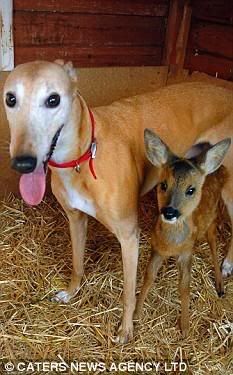 "They are inseparable," says Geoff. "Bramble walks between her legs and they keep kissing each other. They walk together round the sanctuary.
It's a real treat to see them."
"They are inseparable," says Geoff. "Bramble walks between her legs and they keep kissing each other. They walk together round the sanctuary.
It's a real treat to see them."
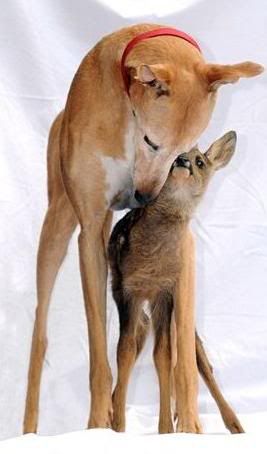 Jasmine will continue to care for Bramble until she is old enough to be returned to woodland life. When that happens, Jasmine will not be lonely. She will be too busy showering love and affection on the next orphan or victim of abuse.
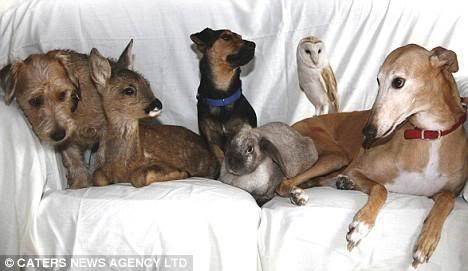 From left - Toby, a stray Lakeland dog; Bramble, orphaned Roe deer; Buster, a stray Jack Russell; a dumped rabbit; Sky, an injured barn owl; and Jasmine, with a Mothers heart, doing best what a caring Mother would do.
Sunday, March 29, 2009
How to piss off your neighbors
 Terrible Tombstones are a good way to let your neighbors know that you do not enjoy their pets using your yard as their personal restroom.
You may not make many friends by putting this in your front lawn, but the point is well made.
$9.95 at Terrible Tombstones
(via Nerd Approved)
Terrible Tombstones are a good way to let your neighbors know that you do not enjoy their pets using your yard as their personal restroom.
You may not make many friends by putting this in your front lawn, but the point is well made.
$9.95 at Terrible Tombstones
(via Nerd Approved)
Saturday, March 28, 2009
Caturday funnies
 I received this photo via email. If anyone knows the original photographer, let me know please.
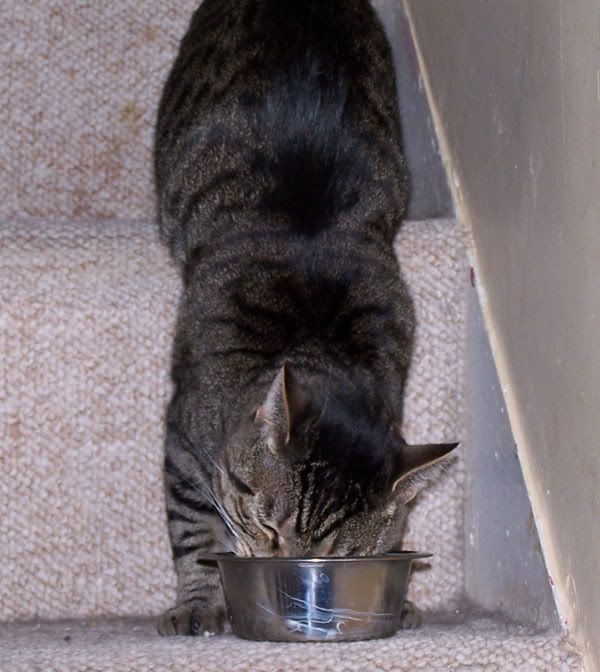 from When Cats Attack
Friday, March 27, 2009
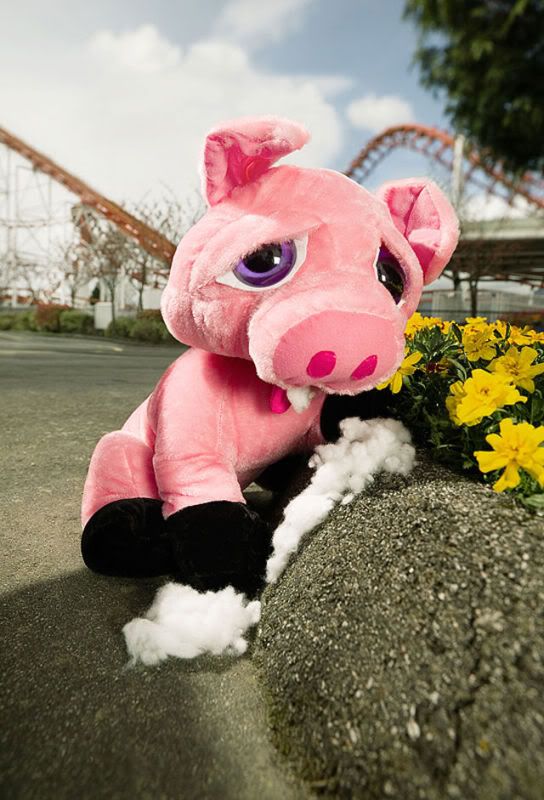
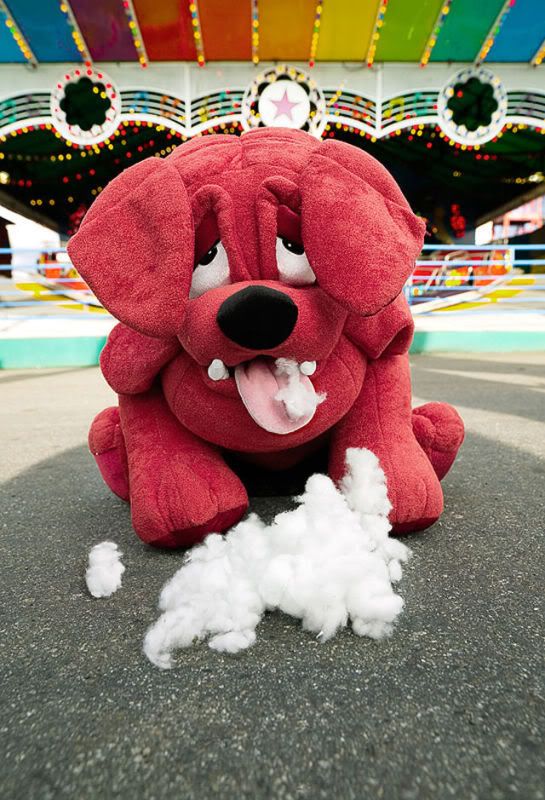

Ouch!
 A man poses with the alleged largest egg in the world in central London. The egg was laid in the early 17th century by the now-extinct Great Elephant Bird of Madagascarto. It is priced at $7,340 and will be sold at The Chelsea Antiques Fair.
Photo Credit: Shaun Curry-AFP/Getty Images
A man poses with the alleged largest egg in the world in central London. The egg was laid in the early 17th century by the now-extinct Great Elephant Bird of Madagascarto. It is priced at $7,340 and will be sold at The Chelsea Antiques Fair.
Photo Credit: Shaun Curry-AFP/Getty Images

Are cavers spreading lethal bat disease?
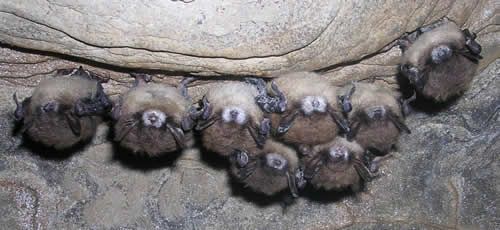 The white fungus that appears on bats' noses and wings — so-called white-nose syndrome — has killed more than a half-million bats over the past three winters, but scientists had not been able to figure out how the fungus got into the bat caves and why it spread.
Now, they have big clue: Humans, specifically cavers, who "may be spreading the causative agent."
Source
Photo Credit: Nancy Heaslip, New York Dept. of Environmental Conservation
Little brown bats with white-nose syndrome, New York
The white fungus that appears on bats' noses and wings — so-called white-nose syndrome — has killed more than a half-million bats over the past three winters, but scientists had not been able to figure out how the fungus got into the bat caves and why it spread.
Now, they have big clue: Humans, specifically cavers, who "may be spreading the causative agent."
Source
Photo Credit: Nancy Heaslip, New York Dept. of Environmental Conservation
Little brown bats with white-nose syndrome, New York
Thursday, March 26, 2009
Endangered and Dangerous
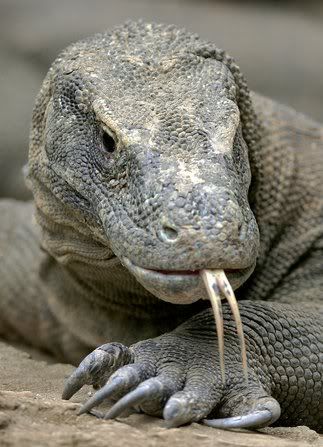 An Indonesian fisherman has been killed by Komodo dragons after he was attacked while trespassing on a remote island in search of fruit, officials said Tuesday.
Muhamad Anwar, 32, bled to death on his way to hospital after being mauled by the reptiles at Loh Sriaya, in eastern Indonesia's Komodo National Park.
Komodo dragons, the world's heaviest lizards, can grow up to 3 meters (10 feet) in length and have a toxic bite that they use to kill prey such as buffalo, returning to feast when the animal succumbs to the poison.
Despite their ungainly appearance, the carnivorous reptiles can run as fast as a dog in short bursts, jump up on their hind legs, and kill animals with a blow of their powerful tails.
Attacks on humans are rare, but Monday's incident is the latest in a series in which the monster lizards -- which have forked tongues and fearsome claws --have killed or injured people.
Last month a park ranger survived after a Komodo dragon climbed the ladder into his hut and savaged his hand and foot. In 2007 an eight-year-old boy died after being mauled.
In June last year, a group of divers who were stranded on an island in the national park -- the dragons' only natural habitat -- had to fend off several attacks from the reptiles before they were rescued.
Source
Photo Credit: Dita Alangkara-AP
An Indonesian fisherman has been killed by Komodo dragons after he was attacked while trespassing on a remote island in search of fruit, officials said Tuesday.
Muhamad Anwar, 32, bled to death on his way to hospital after being mauled by the reptiles at Loh Sriaya, in eastern Indonesia's Komodo National Park.
Komodo dragons, the world's heaviest lizards, can grow up to 3 meters (10 feet) in length and have a toxic bite that they use to kill prey such as buffalo, returning to feast when the animal succumbs to the poison.
Despite their ungainly appearance, the carnivorous reptiles can run as fast as a dog in short bursts, jump up on their hind legs, and kill animals with a blow of their powerful tails.
Attacks on humans are rare, but Monday's incident is the latest in a series in which the monster lizards -- which have forked tongues and fearsome claws --have killed or injured people.
Last month a park ranger survived after a Komodo dragon climbed the ladder into his hut and savaged his hand and foot. In 2007 an eight-year-old boy died after being mauled.
In June last year, a group of divers who were stranded on an island in the national park -- the dragons' only natural habitat -- had to fend off several attacks from the reptiles before they were rescued.
Source
Photo Credit: Dita Alangkara-AP
Endangered and Adorable
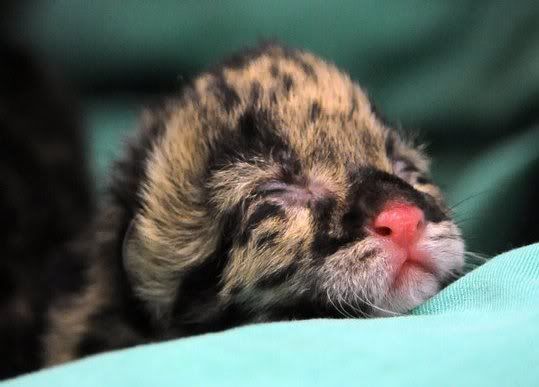
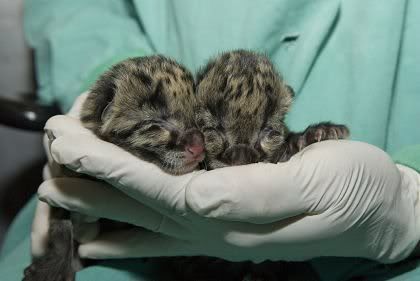 In the end, Hannibal did not administer the fatal bite to his mate's neck. And Jao Chu did not immediately kill their offspring, as is often the case.
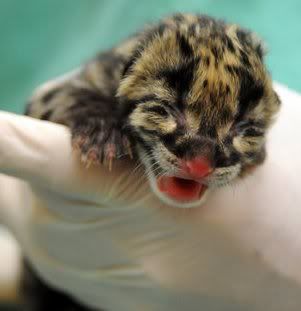
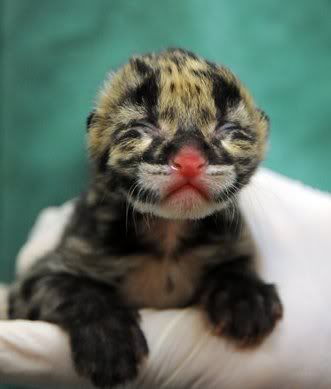
And so, early yesterday, despite murderous tendencies in the captive species, two newborn clouded leopard cubs were found alive, well and squealing at the National Zoo's Conservation and Research Center in Front Royal, Va.
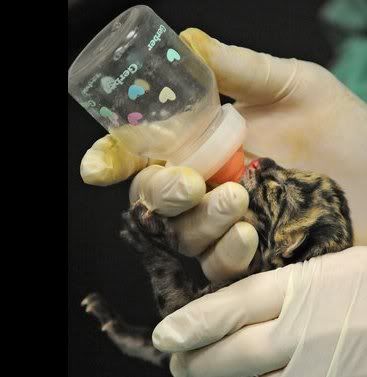
They were taken immediately from their gorgeous mother before she could do them harm, or do them in, placed in an incubator set at 88 degrees and fed salt water from baby bottles. Born with dappled, reptile-pattern fur, they were the first such births at the zoo in 16 years.
Their births were a coup, and the end of a complex reproduction saga involving an exotic, endangered and beautiful species of animal that experts call the ghost cat.
It was also a genetic home run: The zoo said the cubs' genes, which come from outside the captive population, make them among the most valuable clouded leopards in North America.
Source
Photo credit: Tracy A Woodward-The Washington Post
In the end, Hannibal did not administer the fatal bite to his mate's neck. And Jao Chu did not immediately kill their offspring, as is often the case.
And so, early yesterday, despite murderous tendencies in the captive species, two newborn clouded leopard cubs were found alive, well and squealing at the National Zoo's Conservation and Research Center in Front Royal, Va.
They were taken immediately from their gorgeous mother before she could do them harm, or do them in, placed in an incubator set at 88 degrees and fed salt water from baby bottles. Born with dappled, reptile-pattern fur, they were the first such births at the zoo in 16 years.
Their births were a coup, and the end of a complex reproduction saga involving an exotic, endangered and beautiful species of animal that experts call the ghost cat.
It was also a genetic home run: The zoo said the cubs' genes, which come from outside the captive population, make them among the most valuable clouded leopards in North America.
Source
Photo credit: Tracy A Woodward-The Washington Post
Fursday Fun
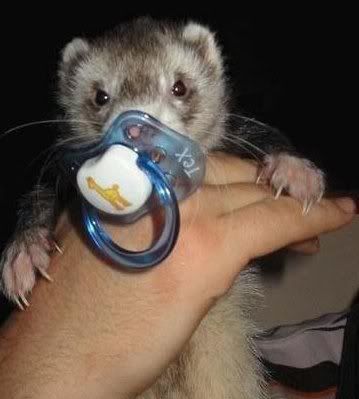 from WebShots, by mbdaily
 from Flickr, by loveisabeautifulthing
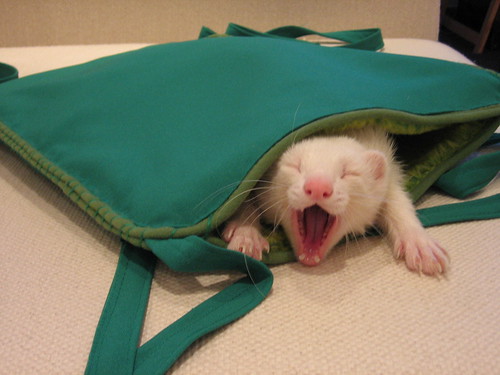 from Flickr, by Isa Costa
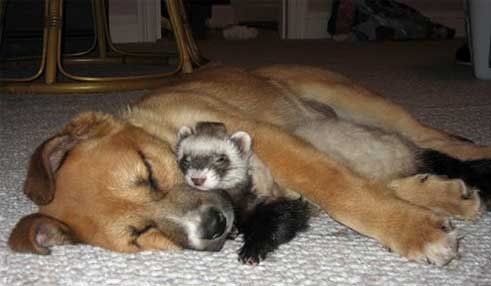 from Funny Pet Photos
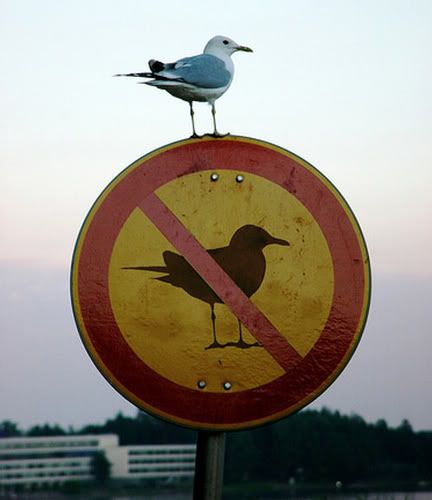
The world's most persecuted parrot
 Today, Monk (or Quaker) parakeets comprise the largest group of the nine species of parrots known to live in the wild in the United States. But their success in establishing an ecological niche for themselves didn't come easily.
The birds, Myiopsitta Monachus, originate from South America. A government-sponsored program in Argentina managed to kill more than 400,000 of them in the late 1950s and early 1960s. But in the mid 1960's, someone had a bright idea: instead of killing them, why not ship them to the U.S.A. and make a few extra dollars? More than 60,000 wild parrots were shipped from South America to the U.S.A. during the 1960s and early 1970s.
Brooklyn has a large population of these wild parrots and many theories as to how the birds first were released into the wild. In 1973, the Federal Government became aware of the parrots' existence in the New York area, and sent out SWAT-style eradication teams which captured many birds and shot those unwilling to surrender. One of the last remaining parrot strongholds, a nest complex on Rikers Island, Queens, managed to survive the eradication teams and are the probable ancestors of the parrots alive today all over Brooklyn.
These intelligent, non-aggressive birds, which no self-respecting scientist has ever claimed have caused any significant crop damage in the U.S., are regarded with extreme hostility in many states. In New Jersey and Connecticut, they are classified as a "potentially dangerous species." In Pennsylvania, they are reportedly euthanized on the spot whenever power companies find them nesting on transmission lines. In Florida, both the state Department of Transportation and the Florida Power & Light utility company do the same thing. Florida Power & Light has for years maintained secret gas chambers where captured parrots are killed en masse.
Stephen Carl Baldwin, at Brooklyn Parrots, writes, "The fact that North America has a new parrot on its shores is in my view a blessing, especially because our countrymen wiped out our only native parrot - the Carolina Parakeet - nearly a hundred years ago. Nature has given us the rarest of gifts: a second chance."
Source
Yes - we do have Monk parakeets in Illinois!
There are monk parakeet colonies in nearly 20 Chicago suburbs.
I took the following photo in Alsip, Illinois, on December 6, 2006.
Today, Monk (or Quaker) parakeets comprise the largest group of the nine species of parrots known to live in the wild in the United States. But their success in establishing an ecological niche for themselves didn't come easily.
The birds, Myiopsitta Monachus, originate from South America. A government-sponsored program in Argentina managed to kill more than 400,000 of them in the late 1950s and early 1960s. But in the mid 1960's, someone had a bright idea: instead of killing them, why not ship them to the U.S.A. and make a few extra dollars? More than 60,000 wild parrots were shipped from South America to the U.S.A. during the 1960s and early 1970s.
Brooklyn has a large population of these wild parrots and many theories as to how the birds first were released into the wild. In 1973, the Federal Government became aware of the parrots' existence in the New York area, and sent out SWAT-style eradication teams which captured many birds and shot those unwilling to surrender. One of the last remaining parrot strongholds, a nest complex on Rikers Island, Queens, managed to survive the eradication teams and are the probable ancestors of the parrots alive today all over Brooklyn.
These intelligent, non-aggressive birds, which no self-respecting scientist has ever claimed have caused any significant crop damage in the U.S., are regarded with extreme hostility in many states. In New Jersey and Connecticut, they are classified as a "potentially dangerous species." In Pennsylvania, they are reportedly euthanized on the spot whenever power companies find them nesting on transmission lines. In Florida, both the state Department of Transportation and the Florida Power & Light utility company do the same thing. Florida Power & Light has for years maintained secret gas chambers where captured parrots are killed en masse.
Stephen Carl Baldwin, at Brooklyn Parrots, writes, "The fact that North America has a new parrot on its shores is in my view a blessing, especially because our countrymen wiped out our only native parrot - the Carolina Parakeet - nearly a hundred years ago. Nature has given us the rarest of gifts: a second chance."
Source
Yes - we do have Monk parakeets in Illinois!
There are monk parakeet colonies in nearly 20 Chicago suburbs.
I took the following photo in Alsip, Illinois, on December 6, 2006.
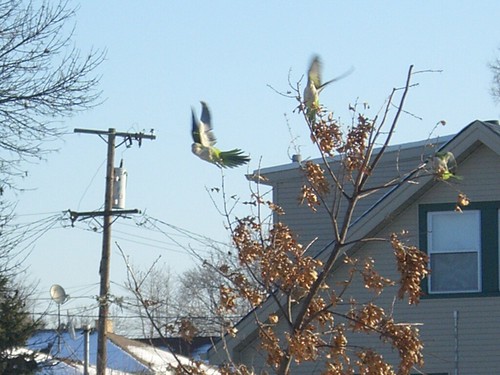 It was 8:30 am, temperature was 36 degrees. There were about a dozen of these gorgeous, vivid green birds at 116th and Springfield.
Wednesday, March 25, 2009

Cute little mini-moos
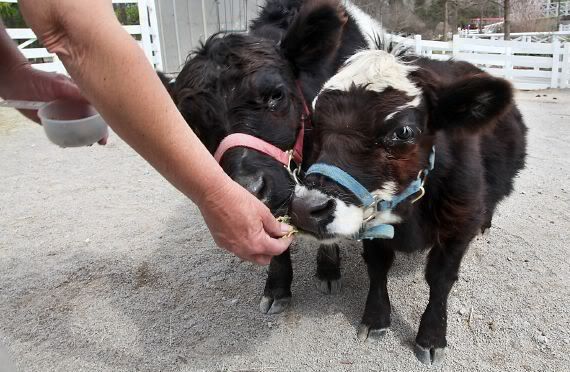 As adorable as they are, the little cows at the Memphis Zoo shouldn't be mistaken for calves. At more than a year old, miniature cows Cloudy and Darwinia are the newest residents at the zoo's Once Upon a Farm.
Cloudy is only about 25 inches tall at the shoulders and was bred from Hereford and American Lowline stock. Her companion, Darwinia, is 36 inches at the shoulders and was bred from American Lowline and Belted Galloway, a heritage breed with a recorded history some experts say dates back to the 16th century, when farms were smaller.
Source
Photo credit: Lance Murphey/The Commercial Appeal
As adorable as they are, the little cows at the Memphis Zoo shouldn't be mistaken for calves. At more than a year old, miniature cows Cloudy and Darwinia are the newest residents at the zoo's Once Upon a Farm.
Cloudy is only about 25 inches tall at the shoulders and was bred from Hereford and American Lowline stock. Her companion, Darwinia, is 36 inches at the shoulders and was bred from American Lowline and Belted Galloway, a heritage breed with a recorded history some experts say dates back to the 16th century, when farms were smaller.
Source
Photo credit: Lance Murphey/The Commercial Appeal

Hungry?
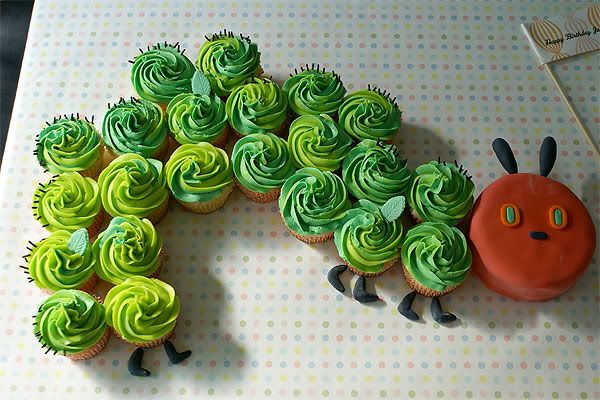 The Very Hungry Caterpillar Cupcake Party Train by Lyndsay of Coco Cake Cupcakes.
(via The Daily What)
The Very Hungry Caterpillar Cupcake Party Train by Lyndsay of Coco Cake Cupcakes.
(via The Daily What)
Tuesday, March 24, 2009
A heroic bird
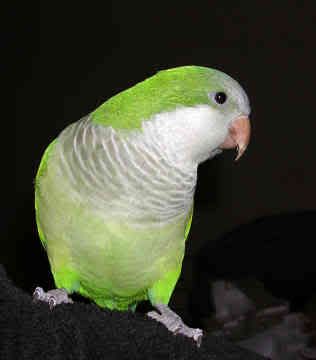 A parrot that alerted his owner about a baby who was choking was recognized as a hero by the Red Cross. Willie the parrot was given the Animal Lifesaver Award during the "Breakfast of Champions" event in Denver.
Willie received the award for his actions in November, when he and owner Megan Howard were baby-sitting a toddler. Willie repeatedly yelled "Mama, baby" when Howard went to the bathroom and the toddler started to choke on her breakfast.
Howard saved the baby by performing the Heimlich maneuver but she said Willie "is the real hero."
Source
A parrot that alerted his owner about a baby who was choking was recognized as a hero by the Red Cross. Willie the parrot was given the Animal Lifesaver Award during the "Breakfast of Champions" event in Denver.
Willie received the award for his actions in November, when he and owner Megan Howard were baby-sitting a toddler. Willie repeatedly yelled "Mama, baby" when Howard went to the bathroom and the toddler started to choke on her breakfast.
Howard saved the baby by performing the Heimlich maneuver but she said Willie "is the real hero."
Source
A strange bird
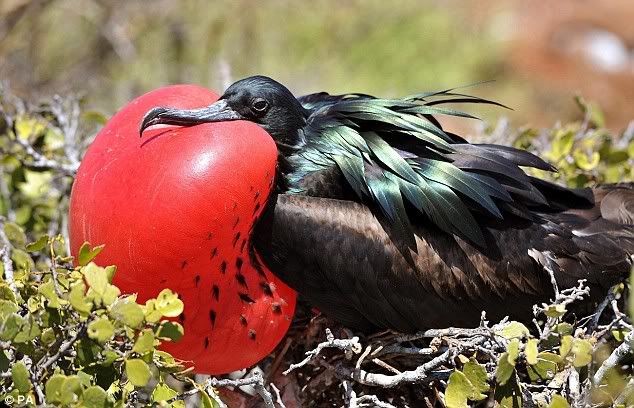 This is a great frigate bird. These birds can puff out their inflatable pouch to almost the full size of their body - a display used to attract the opposite sex.
Photo source
This is a great frigate bird. These birds can puff out their inflatable pouch to almost the full size of their body - a display used to attract the opposite sex.
Photo source

Monday, March 23, 2009
Stranded whales die amid rescue efforts
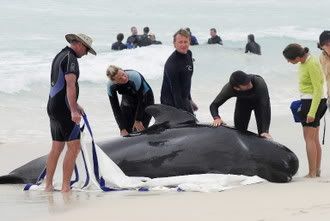 More than 60 whales are dead and 17 remain stranded after beaching themselves on Western Australia's southwest coast.
More than 100 volunteers were desperately trying to keep the animals in a group because if they were sent into the ocean on their own, they could return to beach themselves after hearing the distress calls of other whales.
Mass strandings of long-finned pilot whales on Australian coasts have occurred on average once a year since 1970.
Earlier this month, on King Island, northwest of Tasmania, more than 140 pilot whales died after nearly 200 beached themselves on the coast.
A DEC spokeswoman said what caused the animals to strand themselves was a mystery that would be investigated.
Source
Photo credit: Steve Mitchell, AP
More than 60 whales are dead and 17 remain stranded after beaching themselves on Western Australia's southwest coast.
More than 100 volunteers were desperately trying to keep the animals in a group because if they were sent into the ocean on their own, they could return to beach themselves after hearing the distress calls of other whales.
Mass strandings of long-finned pilot whales on Australian coasts have occurred on average once a year since 1970.
Earlier this month, on King Island, northwest of Tasmania, more than 140 pilot whales died after nearly 200 beached themselves on the coast.
A DEC spokeswoman said what caused the animals to strand themselves was a mystery that would be investigated.
Source
Photo credit: Steve Mitchell, AP
Rare reptile found first time in 200 years
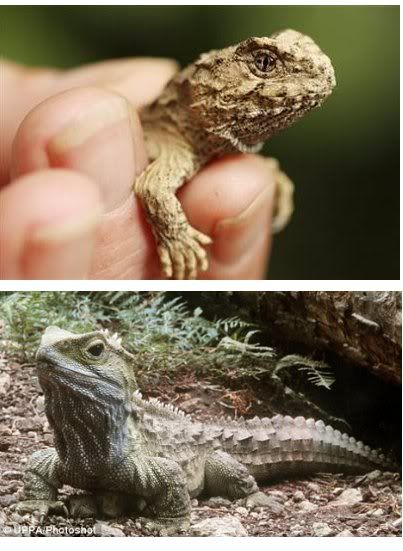 A hatchling of a rare reptile with lineage dating back to the dinosaur age has been found in the wild on the New Zealand mainland for the first time in about 200 years.
The baby tuatara was discovered by staff during routine maintenance work at the Karori Wildlife Sanctuary.
Tuatara, which measure up to 32 inches when full grown, are the last descendants of a lizard-like reptile species that walked the Earth with the dinosaurs 225 million years ago, zoologists say.
There are estimated to be about 50,000 of them living in the wild on 32 small offshore islands cleared of predators, but this is the first time a hatchling has been seen on the mainland in about 200 years.
The New Zealand natives were nearly extinct on the country's three main islands by the late 1700s due to the introduction of predators such as rats.
Source
A hatchling of a rare reptile with lineage dating back to the dinosaur age has been found in the wild on the New Zealand mainland for the first time in about 200 years.
The baby tuatara was discovered by staff during routine maintenance work at the Karori Wildlife Sanctuary.
Tuatara, which measure up to 32 inches when full grown, are the last descendants of a lizard-like reptile species that walked the Earth with the dinosaurs 225 million years ago, zoologists say.
There are estimated to be about 50,000 of them living in the wild on 32 small offshore islands cleared of predators, but this is the first time a hatchling has been seen on the mainland in about 200 years.
The New Zealand natives were nearly extinct on the country's three main islands by the late 1700s due to the introduction of predators such as rats.
Source
Sony World Photography Awards 2009: professional finalists
The professional finalists of the 2009 Sony World Photography Awards have been announced.
Here are some of those which feature animals.
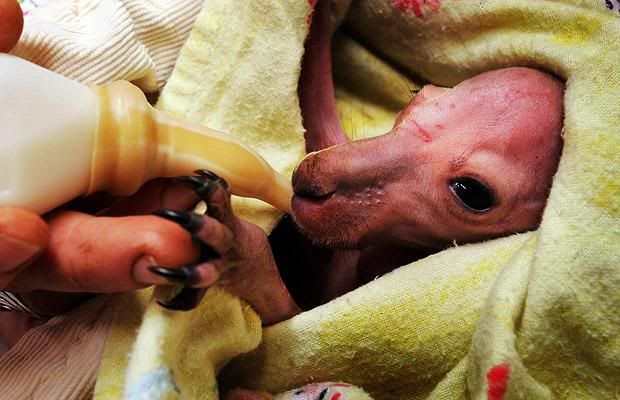 Natural History: Lisa Maree Williams (Australia)
Winner - Wildlife Warriors: A kangaroo joey receives treatment at The Australian Wildlife Hospital
Natural History: Lisa Maree Williams (Australia)
Winner - Wildlife Warriors: A kangaroo joey receives treatment at The Australian Wildlife Hospital
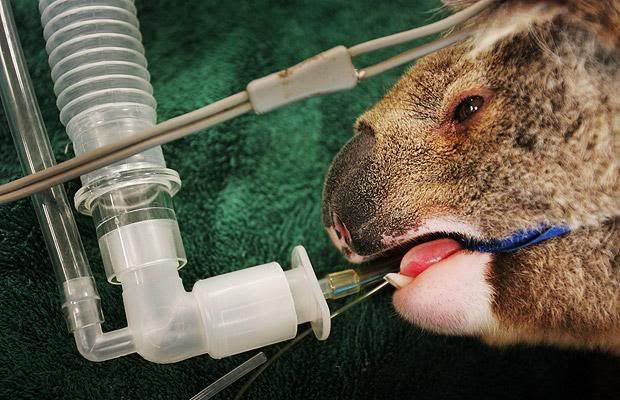 Natural History: Lisa Maree Williams (Australia)
Winner - Wildlife Warriors: An injured koala receives treatment at The Australian Wildlife Hospital
Natural History: Lisa Maree Williams (Australia)
Winner - Wildlife Warriors: An injured koala receives treatment at The Australian Wildlife Hospital
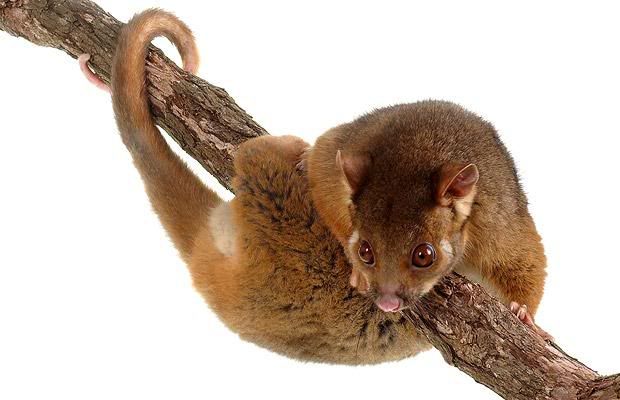 Second: Steve Morenos (Australia)
Australian Possum
Second: Steve Morenos (Australia)
Australian Possum
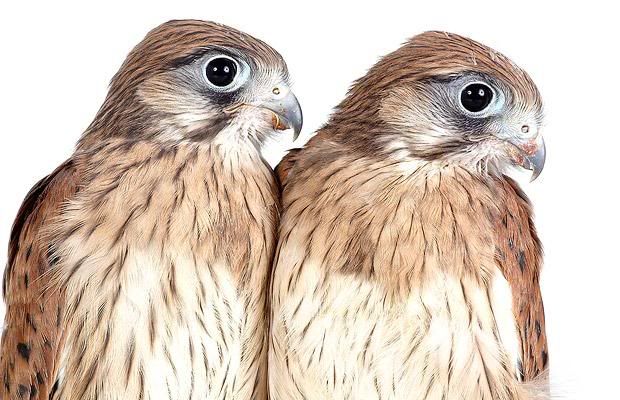 Second: Steve Morenos (Australia)
Kestrels
Second: Steve Morenos (Australia)
Kestrels
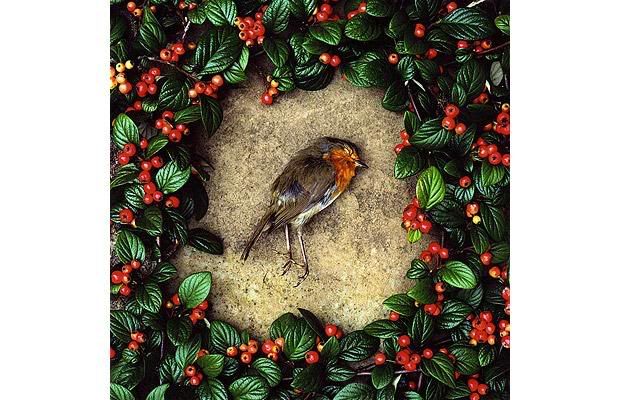 Conceptual & Constructed: Tamany Baker (UK)
Winner - A series called Living With Wolfie, a response to the "presents" that her beloved cat brings into the home.
Conceptual & Constructed: Tamany Baker (UK)
Winner - A series called Living With Wolfie, a response to the "presents" that her beloved cat brings into the home.
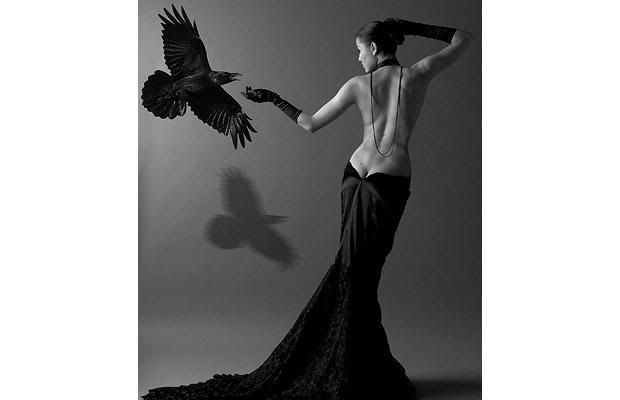 Fashion: Piotr Fajfer (Poland)
Winner - Princess of the Crows for Eva Danhofer
Source
Fashion: Piotr Fajfer (Poland)
Winner - Princess of the Crows for Eva Danhofer
Source
Subscribe to:
Posts (Atom)